


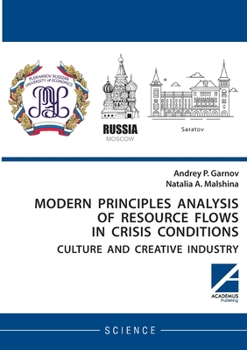
Modern principles analysis of resource flows in crisis conditions: culture and creative industry

The culture industry can become attractive to capital only if the organizational and economic mechanisms that support it are built: integrated structures, multi-channel funding of culture, and public-private partnership. This monograph sets out those mechanisms and the analytical apparatus behind them, treating culture and the creative industries not as a subsidized sphere but as a full-fledged source of state income.
The authors begin from the global picture. The creative economy accounts for some 7 per cent of world gross domestic product and grows by no less than 8.7 per cent a year; world trade in creative products has reached half a trillion dollars, with China, the United States and France as its largest participants. Against that background the book examines how cultural services are managed in conditions of crisis.
The core of the study is the analysis of resource flows. Material, information, financial and labour flows in the logistics systems of the culture industry are examined against traditional logistics concepts and against the specific features of the service sphere; the logistization of the creative industries is given its own methodological tools; and the interaction of the digital economy with innovative logistics methods is treated separately. The closing chapter applies the method of strategic planning to the management of flow processes in the culture industry.
The work yields both new theoretical propositions and empirical data on the functioning of the culture industry and on regional development, and offers criteria for evaluating its effectiveness and for justifying the directions of its support and funding, in accordance with the characteristics and needs of regional economies.
Addressed to researchers, university teachers and graduate students in economics and cultural policy, and to managers in the cultural sector and in regional administration.
Customer Reviews
ThriftBooks ® and the ThriftBooks ® logo are registered trademarks of Thrift Books Global, LLC
