


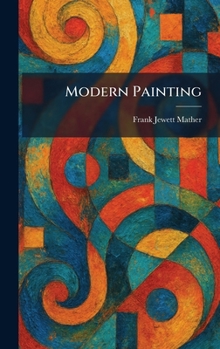
Modern Painting

Select Format
Select Condition 
Book Overview
"Modern Painting" is an insightful and comprehensive examination of the evolution of visual art from the early nineteenth century through the formative years of the twentieth century. Written by the distinguished art historian and critic Frank Jewett Mather, this work surveys the transition from academic traditions to the revolutionary movements that redefined the medium. The text explores the shifting paradigms of aesthetic expression, providing a detailed analysis of Romanticism, Realism, and the transformative impact of Impressionism and Post-Impressionism.
Mather evaluates the technical innovations and philosophical shifts of the era, offering critical perspectives on the masters who challenged the status quo. By tracing the development of individual styles and broader movements, the book clarifies how artists began to prioritize personal vision and emotional truth over literal representation. This scholarly yet accessible survey serves as a vital guide for understanding the historical and cultural forces that birthed modernism. It remains a significant contribution to art historiography, capturing a pivotal moment in the history of creativity when the foundations of contemporary art were being laid.
This work has been selected by scholars as being culturally important, and is part of the knowledge base of civilization as we know it. This work was reproduced from the original artifact, and remains as true to the original work as possible. Therefore, you may see the original copyright references, library stamps (as most of these works have been housed in our most important libraries around the world), and other notations in the work.
This work is in the public domain in the United States of America, and possibly other nations. Within the United States, you may freely copy and distribute this work, as no entity (individual or corporate) has a copyright on the body of the work.
As a reproduction of a historical artifact, this work may contain missing or blurred pages, poor pictures, errant marks, etc. Scholars believe, and we concur, that this work is important enough to be preserved, reproduced, and made generally available to the public. We appreciate your support of the preservation process, and thank you for being an important part of keeping this knowledge alive and relevant.
Customer Reviews
ThriftBooks ® and the ThriftBooks ® logo are registered trademarks of Thrift Books Global, LLC
