


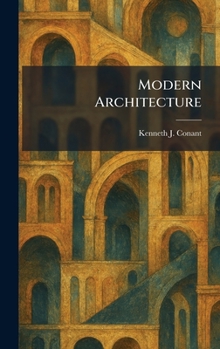
Modern Architecture

"Modern Architecture" is a comprehensive survey of the evolution and aesthetic developments of architectural design as it stood in the early 20th century. Edited by the distinguished historian Kenneth J. Conant, this collection serves as a vital historical document, capturing the transition from traditional revivals to the emerging functionalism and industrial aesthetics of the modern era.
The work provides a detailed visual and thematic examination of the structures, materials, and philosophies that defined the architectural landscape of the time. It highlights key trends in residential, commercial, and civic buildings, offering readers a curated look at the projects and architects who challenged conventions and laid the groundwork for contemporary design. As an authoritative resource from the period, "Modern Architecture" offers invaluable insights for scholars, architects, and history enthusiasts interested in the precursors to International Style and the integration of modern engineering with artistic expression.
By documenting the built environment during a pivotal decade, this work preserves the critical discourse of a transforming world. Its focus on structural integrity, ornamentation, and the role of the architect makes it an essential reference for understanding the roots of modernism and the preservation of 20th-century heritage.
This work has been selected by scholars as being culturally important, and is part of the knowledge base of civilization as we know it. This work was reproduced from the original artifact, and remains as true to the original work as possible. Therefore, you may see the original copyright references, library stamps (as most of these works have been housed in our most important libraries around the world), and other notations in the work.
This work is in the public domain in the United States of America, and possibly other nations. Within the United States, you may freely copy and distribute this work, as no entity (individual or corporate) has a copyright on the body of the work.
As a reproduction of a historical artifact, this work may contain missing or blurred pages, poor pictures, errant marks, etc. Scholars believe, and we concur, that this work is important enough to be preserved, reproduced, and made generally available to the public. We appreciate your support of the preservation process, and thank you for being an important part of keeping this knowledge alive and relevant.
Related Subjects
ArchitectureCustomer Reviews
ThriftBooks ® and the ThriftBooks ® logo are registered trademarks of Thrift Books Global, LLC
