


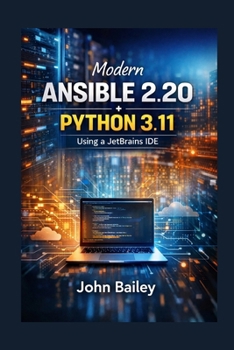
Modern Ansible 2.20 + Python 3.11: Using a JetBrains IDE outline

Modern Ansible 2.20 is the definitive beginner-to-practitioner guide for infrastructure automation with Ansible Core 2.20 and Python 3.11. Whether you manage five servers or five thousand, this primer gives you the systematic understanding to automate confidently - not just copy commands you found on Stack Overflow.
Unlike other Ansible resources that assume too much, this primer starts from absolute first principles and builds steadily through every layer of the stack: YAML, inventory, variables, facts, playbooks, roles, collections, Jinja2 templates, testing with Molecule, custom Python modules, and cloud provisioning.
What You Will LearnBuild a complete Ansible environment with Python 3.11 virtual environments, ansible-lint, and JetBrains IDE integration in under an hourMaster YAML - the language of Ansible - including every gotcha that trips up beginnersWrite idempotent playbooks from scratch, then understand why they workDesign scalable inventory structures using static files, dynamic AWS/GCP/Azure plugins, and group hierarchiesNavigate the 19-level variable precedence system with complete confidenceBuild production-quality roles with defaults, templates, handlers, and role dependenciesTest roles automatically with Molecule across multiple platforms in Docker containersWrite custom Python 3.11 modules with full check mode and diff supportIntegrate Ansible into GitHub Actions and GitLab CI pipelines for fully automated deploymentsApply CIS Benchmark-aligned security hardening through Ansible rolesWhy This Primer Is DifferentEvery concept is explained why before how. You will learn the reasoning behind variable precedence, error handling strategies, and role design - not just the syntax. Every code example is complete and runnable. JetBrains IDE integration is a first-class concern. Testing with Molecule is introduced early and woven throughout.
Who This Book Is ForSoftware engineers, systems administrators, and platform engineers who are new to Ansible or who have used it casually and want a systematic, production-ready understanding. Basic Linux command-line familiarity is required; Python knowledge helps but is not required until the custom modules chapter.
Customer Reviews
ThriftBooks ® and the ThriftBooks ® logo are registered trademarks of Thrift Books Global, LLC
