


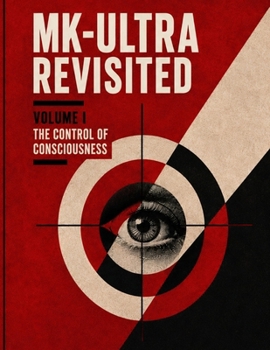
MK-ULTRA Revisited: Volume I: The Control of Consciousness

MK-ULTRA Revisited: Volume I - The Control of Consciousness examines the long history of mind control as a struggle over perception, belief, identity, memory, obedience, and the human map of reality.
This first volume traces the roots of mental influence from ancient systems of ritual, myth, taboo, confession, initiation, propaganda, and religious conversion through the rise of hypnosis, general semantics, behaviorism, social psychology, cultic control, totalitarian thought reform, psychological warfare, and Cold War brainwashing fears.
Rather than treating MK-ULTRA as an isolated scandal, this volume places it inside a broader history of power's attempt to shape consciousness itself. The book explores how states, movements, institutions, intelligence agencies, and closed social systems have sought to control not only what people do, but how they interpret reality.
Topics include Alfred Korzybski and the map-territory distinction, hypnosis and suggestion, Milton Erickson, NLP and submodalities, propaganda and public relations, Jacques Ellul's theory of pre-propaganda, behaviorism, cognitive dissonance, group conformity, cults, totalitarian control, Nazi persuasion systems, Soviet psychiatry, KGB active measures, Maoist thought reform, North Korea, psychological warfare, Project CHATTER, BLUEBIRD, ARTICHOKE, Sidney Gottlieb, LSD experimentation, sensory deprivation, Operation Midnight Climax, and the human cost of MK-ULTRA.
This is a serious nonfiction analysis of influence, coercion, consciousness, and state power. It is written for readers interested in intelligence history, psychological warfare, propaganda, hypnosis, consciousness studies, Cold War research, and the darker side of institutional attempts to control the mind.
Customer Reviews
ThriftBooks ® and the ThriftBooks ® logo are registered trademarks of Thrift Books Global, LLC
