


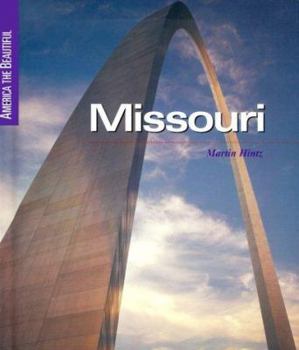
Missouri

Select Format
Select Condition 
Book Overview
Describes the geography, plants, animals, history, economy, language, religions, culture, sports, art, and people of the state of Missouri. This description may be from another edition of this product.
Format:Hardcover
Language:English
ISBN:0516208365
ISBN13:9780516208367
Release Date:January 1999
Publisher:Children's Press(CT)
Length:144 Pages
Weight:1.30 lbs.
Dimensions:0.5" x 8.3" x 9.5"
Age Range:10 to 13 years
Grade Range:Grades 5 to 8
Customer Reviews
1 rating
Showing me and young students about the state of Missouri
Published by Thriftbooks.com User , 20 years ago
Martin Hinz tackles the biggest problem in Missouri on the first page of this volume in the America the Beautiful, Second Series, to wit: How do you pronounce the state's name? Should it be "Missour-EE" or "Missour-AH?" So it is that Chapter One, Versions of Missouri" uses the question of pronunciation, which throws in the mix those who say "Missour-UH." Hintz is even able to look at how region and age come into play for which version Missourians use. That might be why the chapter ends talking about how Missouri got its nickname the "Show-Me" state, which is not as controversial a topic. The next three chapters look at the history of Missouri. Chapter Two, "The Good Old Days," traces the early history from the nomads and mound builders who first settled the region to the Spanish and French who settled the region and the controversy that raged when the state wanted to be admitted to the union and the Missouri Compromise of 1820 (Missouri admitted as a slave state and Maine as a free state). Chapter Three, "Movin' On," looks at the bloody history of the state during the Mormon Wars and the Civil War, and ends with the St. Louis World's Fair in 1904 and the establishment of Prohibition. Chapter Four, "In the National Limelight," looks at the Great Depression, Harry S Truman as the Missouri president and the post-World War II era to the 21st-century. Chapter Five, "The Neighborly State," looks at how four major geographic areas unite to form Missouri: the glaciated plains of the northwest, the western plains, the Ozark Mountains of the south, and the southeastern lowlands. "A Rich Diversity of Towns" is the topic for Chapter Six, looks at the cities and villages that are rich in history, and also contains the recipe for Kansas City-Style Barbecue Sauce, which is a horrible thing to read late at night because that is hardly the time to start making barbecue sauce (besides, I do not have any liquid smoke). The politics of Missouri is covered in Chapter Seven, "'Show-Me' Government," which includes both Tom Pendergast's political machine and Missouri Senator David Rice Atchison, the man who was president of the U.S. for one day in 1849. This is the chapter where you get to find out about the state symbols, which includes the state folk dance (Square dance), musical instrument (Fiddle), and animal (Missouri mule). The economy of Missouri is detailed in Chapter Eight, "In the Center of It All," which looks at the mix of agriculture, mining, and manufacturing. Chapter Nine, "The People of Change," looks at all the migrants who have come to Missouri, which has always been a crossroads for travelers. Finally, Chapter Ten, "Poets, Painters, and Players," looks at the creative people and athletes who have come from Missouri. Of course, this list begins with Samuel Clemens, but includes T.S. Eliot, Langston Hughes, Maya Angelou, W.C. Handy, Thomas Hart Benton, George Catlin, Dizzy Dean, and Mark McGwire. The back of this book has a Timeline t
Copyright © 2026 Thriftbooks.com Terms of Use
| Privacy Policy | Do Not
Sell/Share My Personal Information | Cookie Policy | Cookie Preferences | Accessibility Statement
ThriftBooks® and the ThriftBooks® logo are registered trademarks of Thrift Books Global, LLC
ThriftBooks® and the ThriftBooks® logo are registered trademarks of Thrift Books Global, LLC
