


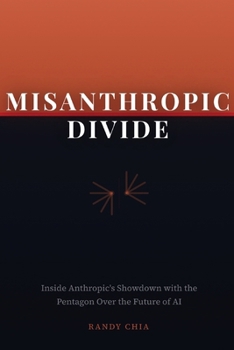
Misanthropic Divide: Inside Anthropic's Showdown with the Pentagon Over the Future of AI

In February 2026, the Pentagon gave Anthropic-the AI company behind Claude-an ultimatum: remove your safety restrictions or lose everything.
Anthropic had two red lines. Its AI would not be used for mass surveillance of American citizens. It would not be used to operate fully autonomous weapons. For eighteen months, those restrictions hadn't prevented the military from doing anything it wanted. Claude processed intelligence on classified networks, supported active operations, and helped warfighters make faster decisions. The red lines were never triggered. Not once.
The Pentagon wanted them gone anyway.
What followed was the most consequential confrontation between a technology company and the U.S. government in the twenty-first century. Defense Secretary Pete Hegseth summoned CEO Dario Amodei to the Pentagon and delivered the terms: agree that Claude could be used for "all lawful purposes" by 5:01 p.m. Friday, or face contract termination, a supply chain risk designation normally reserved for companies like Huawei, and possible criminal prosecution under the Defense Production Act.
Amodei said no.
Misanthropic Divide is the definitive account of the week that exposed the fault line between Silicon Valley and the national security state. Drawing on reporting from dozens of sources, leaked internal communications, and published contract language, Randy Chia reconstructs the crisis hour by hour-from the disputed Palantir phone call that triggered the rupture, through the Pentagon's escalating threats, to Sam Altman's extraordinary move to sign the deal Anthropic was destroyed for refusing, on the same day the destruction was carried out.
Along the way, the book reveals the surveillance capabilities the Pentagon was actually building, the internal dynamics at OpenAI as it rushed to replace its rival, the Palantir infrastructure nightmare that made removing Claude nearly impossible, and the fundamental question neither side could answer: who draws the red lines on the most powerful technology ever created?
This is not a story about whether AI should be used by the military. Both sides agreed it should. This is a story about what happens when a company says not like that-and the government decides to make an example of what "no" costs.
Customer Reviews
ThriftBooks ® and the ThriftBooks ® logo are registered trademarks of Thrift Books Global, LLC
