


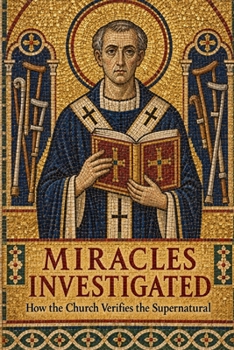
Miracles Investigated: How the Church Verifies the Supernatural

For centuries, claims of miraculous events have attracted believers, skeptics, physicians, theologians, and Church authorities. Reports of unexplained healings, visions, incorruptible bodies, eucharistic phenomena, and other extraordinary events have sometimes become important parts of Christian devotion. But how does the Catholic Church determine whether a reported miracle should be accepted?
Miracles Investigated: How the Church Verifies the Supernatural explores the historical and practical process used to examine claims of miraculous events, with particular attention to Catholic investigations.
The book explains why the Church approaches extraordinary claims cautiously and examines the different forms of evidence that may be considered. Readers will discover how medical examinations, witness testimony, historical documentation, theological review, and scientific investigation can contribute to the assessment of an alleged miracle.
It also explores famous cases associated with saints, Marian apparitions, pilgrimage sites, and reported healings, while distinguishing between what has been officially recognized by Church authorities and what remains unproven or disputed.
The book examines the difference between faith and evidence, the limits of scientific explanation, and why an event being medically unexplained does not automatically mean that the Church has declared it supernatural.
From medieval miracle stories to modern investigations, Miracles Investigated offers a fascinating look at the intersection of religion, history, medicine, science, and human belief.
For readers interested in Catholic history, miracles, saints, supernatural claims, and the methods used to evaluate extraordinary religious phenomena, this book provides an accessible and balanced introduction.
Customer Reviews
ThriftBooks ® and the ThriftBooks ® logo are registered trademarks of Thrift Books Global, LLC
