


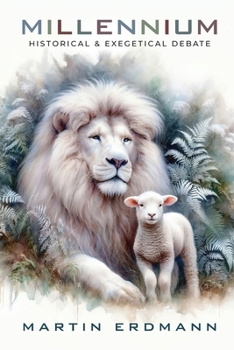
Millennium: Historical & Exegetical Debate

In churches and Christian organizations, social work and the promotion of Christian values are increasingly replacing awareness of human sinfulness and proclamation of salvation through Jesus Christ. Regarding the question of whether Christians should strive for "heaven on earth" by Christianizing society, even through government means, this book is a helpful resource for distinguishing between biblical and seemingly Christian principles.
The Book of Revelation (20:1-10) describes a literal thousand-year reign, or Millennium. Until the Council of Nicaea in 325 CE, this tradition was an essential element of Christian eschatology. Most early church fathers derived their beliefs from this passage in the Book of Revelation and the Jewish concept of a golden age described by Hebrew prophets and Jewish eschatological teachers. After the Christian faith gained Emperor Constantine's favor, the Roman Church fundamentally changed its view of the Millennium. The hope for a future reign of Christ on Earth gave way to the idea of a millennial kingdom in which temporal power was vested in the papacy, which was realized before people's eyes in the present. Over many centuries, the doctrine of a literal millennium fell into disrepute because some of its proponents misrepresented it, and its opponents deliberately distorted it.
Dr. Martin Erdmann provides a thorough examination of the different interpretations of the Millennium doctrine, highlighting their strengths and weaknesses, and advocating for the original interpretation of a literal Millennium yet to come.
Customer Reviews
ThriftBooks ® and the ThriftBooks ® logo are registered trademarks of Thrift Books Global, LLC
