
Skip to content
Scan a barcode
Scan
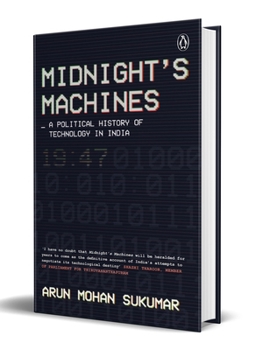
Hardcover Midnight's Machines: A Political History of Technology in India Winner of the 2019 Ramnath Goenka Award for Non-Fiction Book

ISBN: 067009109X

ISBN13: 9780670091096

Midnight's Machines: A Political History of Technology in India Winner of the 2019 Ramnath Goenka Award for Non-Fiction

Named among "The Best Books of 2020" by Bloomberg
Shortlisted for New India Foundation's Kamaladevi Chattopadhyay Book Prize 2020
Every Prime Minister of Independent India has guided, if not personally overseen, one prized portfolio: technology. If, in the early years, Nehru and his scientist-advisors retained an iron grip on it, subsequent governments created a bureaucracy that managed everything from the country's crown jewels - its nuclear and space programmes - to solar stoves and mechanized bullock carts.

But a lesser-known political project began on 15 August 1947: the Indian state's undertaking to influence what the citizens thought about technology and its place in society. Beneath its soaring rhetoric on the virtues or vices of technology, the state buried a grim reality: India's inability to develop it at home. The political class sent contradictory signals to the general public. On the one hand, they were asked to develop a scientific temper, on the other, to be wary of becoming enslaved to technology; to be thrilled by the spectacle of a space launch while embracing jugaad, frugal innovation, and the art of 'thinking small'. To mask its failure at building computers, the Indian state decried them in the seventies as expensive, job-guzzling machines. When it urged citizens to welcome them the next decade, the government was, unsurprisingly, met with fierce resistance. From Jawaharlal Nehru to Narendra Modi, India's political leadership has tried its best to modernize the nation through technology, but on its own terms and with little success.

In this engaging and panoramic history spanning the arc of modern India from the post-War years to present day, Arun Mohan Sukumar gives us the long view with a reasoned, occasionally provocative standpoint, using a lens that's wide enough for the frame it encompasses. With compelling arguments drawn from archival public records and open-source reportage, he unearths the reasons why India embraced or rejected new technologies, giving us a new way to understand and appreciate the individual moments that brought the country into the twenty-first century.

Recommended

Format: Hardcover

Temporarily Unavailable

We receive fewer than 1 copy every 6 months.

Customer Reviews

0 rating
Copyright © 2025 Thriftbooks.com Terms of Use | Privacy Policy | Do Not Sell/Share My Personal Information | Cookie Policy | Cookie Preferences | Accessibility Statement
ThriftBooks ® and the ThriftBooks ® logo are registered trademarks of Thrift Books Global, LLC

GoDaddy Verified and Secured