


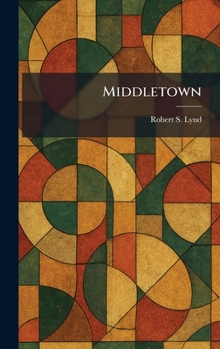
Middletown

"Middletown" is a groundbreaking sociological study that offers an in-depth examination of the social fabric of a typical American small city during a period of rapid industrialization. Conducted by Robert S. Lynd and Helen Merrell Lynd, this seminal work utilizes anthropological methods to analyze the daily lives of residents in Muncie, Indiana, referred to pseudonymously as "Middletown."
The study meticulously explores six major areas of community life: getting a living, making a home, training the young, using leisure, engaging in religious practices, and participating in community activities. By documenting the shifts in social values and behaviors from the late 19th century to the mid-1920s, "Middletown" provides a comprehensive look at how the advent of the automobile, mass media, and industrial technology transformed traditional American life.
It remains a foundational text in the fields of sociology and urban studies, praised for its rigorous empirical approach and its insightful observations on the tensions between tradition and modernity. This classic work continues to be essential reading for anyone interested in the evolution of the American middle class and the complexities of community dynamics in the modern age.
This work has been selected by scholars as being culturally important, and is part of the knowledge base of civilization as we know it. This work was reproduced from the original artifact, and remains as true to the original work as possible. Therefore, you may see the original copyright references, library stamps (as most of these works have been housed in our most important libraries around the world), and other notations in the work.
This work is in the public domain in the United States of America, and possibly other nations. Within the United States, you may freely copy and distribute this work, as no entity (individual or corporate) has a copyright on the body of the work.
As a reproduction of a historical artifact, this work may contain missing or blurred pages, poor pictures, errant marks, etc. Scholars believe, and we concur, that this work is important enough to be preserved, reproduced, and made generally available to the public. We appreciate your support of the preservation process, and thank you for being an important part of keeping this knowledge alive and relevant.
Customer Reviews
ThriftBooks ® and the ThriftBooks ® logo are registered trademarks of Thrift Books Global, LLC
