


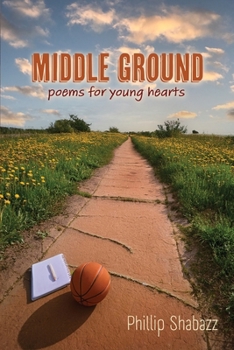
Middle Ground: Poems for Young Hearts

Middle Ground is a 152-page poetry collection that traces the arc of adolescence through five seasonal chapters, speaking directly to the lived experiences of young people while maintaining poetic craft. Designed for middle and high school students as well as adult readers, the collection refuses to soften the realities of contemporary youth-economic hardship, systemic racism, gun violence, incarceration, mental health struggles-while insisting on beauty, resistance, and the possibility of transcendence.
Part One introduces young speakers discovering their voices, navigating family complexities, and establishing identity. Poems like "To Grandma" connect Harriet Tubman to chocolate cake, while "Father's Day" confronts paternal absence with unflinching clarity. "Calculus of the Kitchen" and "Silk Scarf" address class and racial profiling. The chapter establishes the collection's central tensions: belonging vs. alienation, safety vs. danger, inheritance vs. self-creation.
Part Two centers on summer's openness-first love ("Puppy Love," "First Kiss in Summer"), friendship, and loss. "The Day the Lake Stopped Singing" confronts drowning and grief. "For My Brother Back From Juvenile Lock Up" and "Welcome Home, Little Man" address incarceration's impact on families. The chapter balances joy (skating rinks, swimming pools) with awareness that not everyone survives summer.
Part Three This chapter serves as the collection's moral compass, rejecting easy binaries in favor of the complex, lived truth of the 'middle ground'. It moves into autumn's moral complexity. "Middle Ground" serves as the collection's title poem and thematic anchor, arguing for the legitimacy of uncertainty and nuanced thinking. "What I Can't Undo" and "The Secret I Buried" examine complicity in harm. "My Uncle's Code" explores gang violence and loyalty. "Girl, Incarcerated" speaks to systemic injustice. The chapter refuses easy answers while insisting on accountability.
Part Four enters winter's austerity. These poems confront survival, silence, systemic oppression, and the weight of history. "Tied To The Earth I & II" address racial identity and microaggressions. "The Ballad of Hollow-Eyed Joe" uses folklore to explore community memory. "Snowblind Silence" depicts domestic tension. "Wishes For You" offers benediction amid hardship. The chapter shows winter not just as season but as condition-economic, emotional, historical.
Part Five arrives at spring as both renewal and reckoning. "Car Windows Down" celebrates survival. "Ode For Frederick Douglass" positions literacy as insurrection. "Growth Hurts" acknowledges the pain of transformation. "Desired Ones: An Invocation" closes the collection by calling on ancestral powers, folk wisdom, and communal strength-"I call on all folk powers of super hearts and ghosts."
Related Subjects
Teen & Young AdultCustomer Reviews
ThriftBooks ® and the ThriftBooks ® logo are registered trademarks of Thrift Books Global, LLC
