


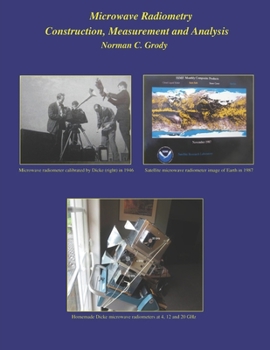
Microwave Radiometry - Construction, Measurement and Analysis
No Customer Reviews

This book begins by describing the construction of microwave radiometers at frequencies between 4 and 22 GHz using low cost components acquired from the Internet. The design is based on the lock-in amplifier approach developed by Dr. Robert Dicke in the 1940's. Although microwave technology has advanced considerably, Dicke's basic design hasn't changed much. The first half of this book describes the radiometer design and its construction. This is followed by radiometer observations of well known atmospheric and surface features using far field measurements. Also discussed are less understood and more challenging issues pertaining to radiometer calibration and surface emissivity determination using near field measurements. The book ends with three chapters on satellite microwave radiometers. These chapters describe the history and measurements which played a large part in establishing the role of microwave radiometry in earth remote sensing. Examples also reveal unresolved observations that need to be better analyzed and understood even after years of launching new satellite instruments. In addition to describing the radiometers and measurements, analytical models are developed to help bridge the gap between observations and their physical interpretation. As such, this book should be of interest to scientists and engineers studying microwave radiometry and its use in remote sensing of the earth's atmosphere and surface.
Format:Paperback
Language:English
ISBN:B0BFTYQ383
ISBN13:9798352771310
Release Date:September 2022
Publisher:Independently Published
Length:170 Pages
Weight:0.90 lbs.
Dimensions:0.4" x 8.5" x 11.0"
Customer Reviews
0 rating
Copyright © 2026 Thriftbooks.com Terms of Use
| Privacy Policy | Do Not
Sell/Share My Personal Information | Cookie Policy | Cookie Preferences | Accessibility Statement
ThriftBooks® and the ThriftBooks® logo are registered trademarks of Thrift Books Global, LLC
ThriftBooks® and the ThriftBooks® logo are registered trademarks of Thrift Books Global, LLC
