


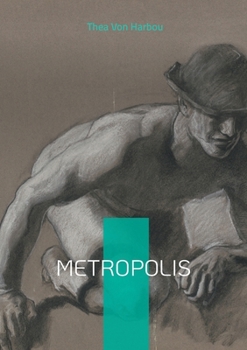
Metropolis: Science fiction and futurism

Metropolis by Thea von Harbou immerses readers in a futuristic city of the twenty-second century, where a privileged elite lives above ground while exploited workers toil in dark underground tunnels. Freder, the son of the ruler Joh Fredersen, is horrified to discover the inhumane conditions endured by the workers. His encounter with Maria, a symbol of peaceful resistance, inspires him to act as a mediator between the two classes. The inventor Rotwang creates a robot in Marias image to manipulate the masses and incite a violent revolution. As the city descends into chaos, Freder strives to rescue children from flooding and expose the deception. The novel explores themes of dehumanization through technology, class struggle, and the hope for reconciliation through love. This classic of German science fiction, which inspired Fritz Langs iconic film, remains a visionary work of dystopian literature. It offers a timeless critique of industrialization and social division, while fitting naturally into the tradition of political speculative fiction. Book categories such as classic science fiction, dystopian fiction, and German literature are subtly highlighted in this enduring novel.
Format:Paperback
Language:English
ISBN:2322570745
ISBN13:9782322570744
Release Date:July 2025
Publisher:Bod - Books on Demand
Length:302 Pages
Weight:0.80 lbs.
Dimensions:0.7" x 5.8" x 8.3"
Customer Reviews
1 rating
A story of love and redemption.
Published by bernie4444 , 4 months ago
I was always fascinated by the movie "Metropolis" (1927, Fritz Lang). I followed the movie from the recovered fragments to the almost complete version with the added footage from Argentina.
Then it dawned on me that the movie was probably adapted from a story. Looking at the credits, I found this story, "Metropolis" by Thea von Harbou (1888-1954). I had no idea that Thea Gabriele von Harbou was part of 77 great movie titles, including "M" and "Siegfried". She was a German screenwriter, author, film director, and actress.
You might find Thea's (second wife of Fritz Lang) writing style quite interesting, not quite modern, but clear. She repeats herself quite often, sort of in the style of the Bible.
As with many movies at that time, the story in the description stuck a lot closer to the book than they do nowadays. Today's movies should say inspired instead of adapted from. Reading the book, you could see the movie almost blow-by-blow.
However, with a few strategic modifications here and there, the book and movie deviate greatly in their purpose and delivery. While the movie was about the class struggle between what was called the hands and the head, with a mediator, the heart. The book was more of a personal struggle for man's soul and redemption.
Of course, the book had the freedom to take more time than the movie to describe actions and actors. Also, of course, there were a lot of scenes that would have to be cut out for the movie. But of those who left him, they were quite accurate. Whether you liked or didn't like the movie, you cannot afford to overlook this book. There are a lot of shocks and surprises awaiting you. And there is always time enough for love.
Copyright © 2026 Thriftbooks.com Terms of Use
| Privacy Policy | Do Not
Sell/Share My Personal Information | Cookie Policy | Cookie Preferences | Accessibility Statement
ThriftBooks® and the ThriftBooks® logo are registered trademarks of Thrift Books Global, LLC
ThriftBooks® and the ThriftBooks® logo are registered trademarks of Thrift Books Global, LLC
