


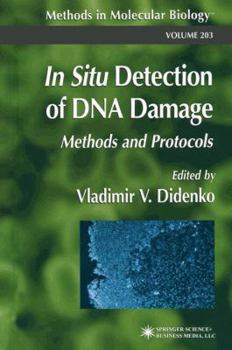
In Situ Detection of DNA Damage: Methods and Protocols
No Customer Reviews

Select Format
Select Condition 
Book Overview
Detection and analysis of DNA damage is of critical importance in a variety of biological disciplines studying apoptosis, cell cycle and cell di- sion, carcinogenesis, tumor growth, embryogenesis and aging, neu- degenerative and heart diseases, anticancer drug development, environmental and radiobiological research, and others. Individual cells within the same tissue or in cell culture may vary in the extent of their DNA damage and, consequently, can display different re- tions to it. These differences between individual cells in the same cell popu- tion are detected using in situ approaches. In situ is a Latin term meaning "on site" or "in place." It is used to denote the processes occurring or detected in their place of origin. In mole- lar and cell biology this usually refers to undisrupted mounted cells or tissue sections. In that meaning "in situ" is used as part of the terms "in situ PCR," "in situ transcription," "in situ hybridization," "in situ end labeling," and "in situ ligation." Sometimes the "in situ" term is applied at the subcellular level to cells disrupted in the process of analysis, for example, in the detection of specific sequences in chromosomes using fluorescent in situ hybridization (FISH). Historically, the term was used primarily in methods dealing with nucleic acids.
Format:Paperback
Language:English
ISBN:1617372722
ISBN13:9781617372728
Release Date:November 2010
Publisher:Humana
Length:313 Pages
Weight:0.99 lbs.
Dimensions:0.7" x 6.0" x 9.0"
Customer Reviews
0 rating
Copyright © 2026 Thriftbooks.com
Terms of Use | Privacy Policy | Do Not Sell/Share My Personal Information | Cookie Notice | Cookie Preferences | Accessibility Statement
ThriftBooks ® and the ThriftBooks ® logo are registered trademarks of Thrift Books Global, LLC
ThriftBooks ® and the ThriftBooks ® logo are registered trademarks of Thrift Books Global, LLC
