


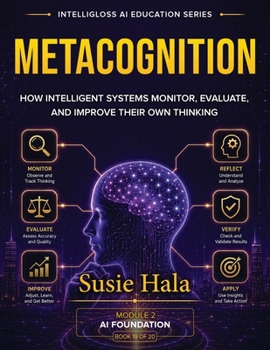
Metacognition: How Intelligent Systems Monitor, Evaluate, and Improve Their Own Thinking

How can an intelligent system evaluate its own reasoning, recognize mistakes, and improve the way it approaches a problem?
METACOGNITION: How Intelligent Systems Monitor, Evaluate, and Improve Their Own Thinking introduces readers to the concept of metacognition and explores how similar ideas are studied and applied in artificial intelligence. Often described as "thinking about thinking," metacognition involves monitoring processes, evaluating performance, recognizing limitations, and adjusting strategies when necessary.
Written in clear, accessible language, this book explores how AI systems can use feedback, self-evaluation, reflection-like processes, error detection, confidence estimates, and adaptive strategies to improve performance. Readers learn how these capabilities relate to reasoning, learning, memory, planning, and decision-making.
The book also distinguishes human metacognition from computational techniques used in artificial intelligence. Today's AI systems do not necessarily think about themselves in the same way humans do. Instead, researchers can design systems with mechanisms that evaluate outputs, detect errors, compare alternatives, use feedback, and modify future actions.
Through explanations, examples, reflections, worksheets, and quizzes, readers are encouraged to examine both the possibilities and limitations of increasingly capable AI systems.
Part of the IntelliGloss AI Education Series, METACOGNITION provides students, educators, families, and curious readers with an accessible foundation for understanding how monitoring, evaluation, feedback, and improvement can contribute to more capable artificial intelligence.
Customer Reviews
ThriftBooks ® and the ThriftBooks ® logo are registered trademarks of Thrift Books Global, LLC
