


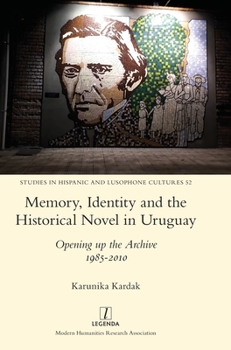
Memory, Identity and the Historical Novel in Uruguay: Opening up the Archive 1985-2010

In the quarter-century following Uruguay's transition to democracy in 1985, there was a surge in the writing and popularity of historical novels. Authors such as Tom?s de Mattos, Amir Hamed, Susana Cabrera, Mario Delgado Apara?n and Marcia Collazo Ib??ez engaged with archival sources, historical works, school textbooks, monuments and other forms of material culture in their bid to re-engage with the past.
In her new study, Kardak follows the trajectory of recent Uruguayan historical fiction. Though these post-transition authors do not directly represent the 1973-85 dictatorship, instead depicting events of the nineteenth century, they nevertheless use history to address very present concerns of cultural identity. Heroes of independence such as Jos? Gervasio Artigas (1764-1850) are reassessed, and historically marginalised groups like the Indigenous Charr?as and Afro-Uruguayans are brought into the forefront of the national story.
Customer Reviews
ThriftBooks ® and the ThriftBooks ® logo are registered trademarks of Thrift Books Global, LLC
