


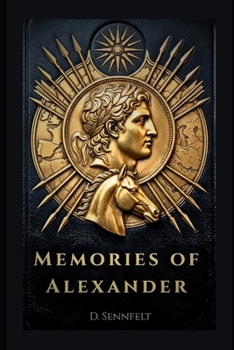
Memories of Alexander

He climbed a volcanic mountain in the Afar in the summer of 331 BCE. An old man held out a cup of water from a spring beneath the central cone. Drink, the old man said, and live forever. Drink, and the island rises. Drink, and become the king the world has always needed.
He set the cup down.
The decision shaped the next twelve years - Gaugamela, Babylon, Persepolis, Bactria, India, the Gedrosian desert, the Susa marriages, Hephaestion's death, the Etemenanki restoration, the cup at Medius's dinner that he did not know had been poisoned. Every act of the campaign was conducted under the authority of what the summit had shown him.
Memories of Alexander is the first-person memoir Alexander never wrote - composed from the threshold, in the cool periodic register Marguerite Yourcenar gave to Hadrian, by a king looking back at the arc he had been authorised to conduct. Alexander recounts what the official chronicles preserved and what they could not. The boy at Pella who tamed Bucephalus. The grove at Mieza where Aristotle taught him the location of Atlantis was not metaphor but coordinates. The night ride to Siwa through the Libyan desert, where the oracle of Zeus-Ammon confirmed his paternity. The molten lead wall at Bab-el-Mandeb that failed in the strait. The two companions - Hephaestion at the mortal level, Matun at the immortal - who walked the journey beside him in the architecture the Iliad had always carried. The vision in the chamber at Dama Ali, in which he saw both what the cup offered and what the refusal would produce. Babylon in early summer of 323, the tower rising, the pyre rising, the Arabian expedition scheduled for the following spring.
A sovereign expecting death does not schedule an Arabian expedition. He had scheduled one. He wanted to live.
This is Memories of Alexander - historical fiction in the high tradition, drawing on Arrian, Plutarch, Diodorus, and the Atlantean inheritance Aristotle preserved at Mieza. A meditation on power, sovereignty, mortality, and the cost of the choice to remain mortal when immortality had been offered and would have been accepted by any other king.
Customer Reviews
ThriftBooks ® and the ThriftBooks ® logo are registered trademarks of Thrift Books Global, LLC
