


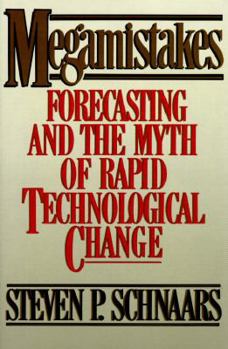
Megamistakes: Forecasting and the Myth of Rapid Technological Change


The author identifies the most common mistakes in forecasting technological developments and provides guidelines. He considers forecasts preceding vibrant growth in computers and other major products... This description may be from another edition of this product.
Format:Hardcover
Language:English
ISBN:0029279526
ISBN13:9780029279526
Release Date:February 1989
Publisher:Free Press
Length:202 Pages
Weight:1.25 lbs.
Dimensions:0.9" x 6.4" x 9.6"
Customer Reviews
2 ratings
A look at the factors delaying acceptance of new ideas
Published by Thriftbooks.com User , 21 years ago
Many exciting technical innovations have flopped in the marketplace - to begin with, at least. In fact, there is evidence that it can take society from 10 to 25 years or even longer to accept a radically new idea. This often results in the original inventors being neglected while others reap the rewards long after. Occasionally, however, the exact opposite happens - as with personal computers and the Internet. In these (rather rare) cases, the new idea is so compelling that it sweeps aside all resistance and everyone simply must have it. Steven Schnaars has put together a fascinating and extremely valuable book by researching these syndromes. The title refers to the way that even leaders of industry repeatedly get their predictions wildly wrong. Strongly recommended for anyone involved with innovation, marketing, starting a new enterprise... or simply interested in the convoluted workings of the human mind.
Useful Explanations of Failed Prediction - No Gloating
Published by Thriftbooks.com User , 26 years ago
The shelves of libraries and bookstore always have at least a few books, usually humorous in tone, about the failed predictions of clever scientists and experts. The authors, even when the book takes a more serious tone, never get much beyond the gloating stage of analysis. "These guys are morons" should be said loudly and the prospective reader could move on to other titles without missing anything.This book is NOT in that undistinguished company. Like Professor Schnaar's other works, this book begins with a systematic review of the material and then an analysis of method - how the predictors went about predicting. There are recurring themes and tendencies in most of the predictions (leaving out the "morons" thesis) -the glamour of the new technology, underrating the natural conservatism of consumers or wildly overestimating the benefits. Professor Schnaar's examples are illuminating and well-presented with NO GLOATING and little monday morning quarterbacking. The failures are shown as systematic lapses, failure of method that any intelligent person could fall victim.The one great insight in the book is that technology will not have a solid chance of changing the society until it shows at least a tenfold increase in performance over its present competitors. It sounds like a very conservative measure, but it still would keep the investor out of any space colony company and would push the investment in semiconductors in the tardy, johnny-come-lately year of 1974.The reader will never come across another breathless article in TIME about "the" NEW thing and not be able to think clearly about it.
Copyright © 2026 Thriftbooks.com
Terms of Use | Privacy Policy | Do Not Sell/Share My Personal Information | Cookie Policy | Cookie Preferences | Accessibility Statement
ThriftBooks ® and the ThriftBooks ® logo are registered trademarks of Thrift Books Global, LLC
ThriftBooks ® and the ThriftBooks ® logo are registered trademarks of Thrift Books Global, LLC
