


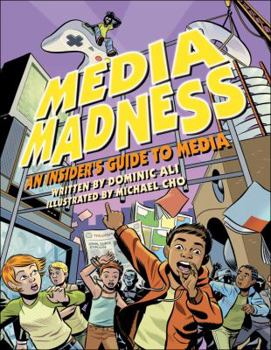
Media Madness: An Insider’s Guide to Media

Select Format
Select Condition 
Book Overview
How ?real? is reality TV? Why do magazine models look so great? How much money do musicians make from CD sales? Can radio DJs play anything they want? These and lots of other questions are answered in... This description may be from another edition of this product.
Format:Hardcover
Language:English
ISBN:1553371747
ISBN13:9781553371748
Release Date:March 2005
Publisher:Kids Can Press
Length:64 Pages
Weight:1.10 lbs.
Dimensions:11.0" x 1.0" x 9.0"
Age Range:10 to 14 years
Grade Range:Grades 5 to 9
Customer Reviews
2 ratings
When it comes to understanding media madness, just question everything
Published by Thriftbooks.com User , 20 years ago
On average, kids between the ages of two and seventeen spend nearly four and a half hours a day in front of electronic screens, such as televisions, computers and video games. This is more time than they spend with their parents. Today "media," that is to say methods of communication, reach a massive audience. With television, radio, video games, magazines and newspapers it is possible to be freaked out by all of these media. That is why the first thing that writer Dominic Ali tells illustrator Michael Cho at the start of "Media Madness: An Insider's Guide to Media," is to just ask yourself the Big Six questions: (1) Who created this message and why are they sending it? (2) Who is the target audience and how is the message tailored to them? (3) How does this message get your attention? (4) What values and lifestyles are shown? (5) How might other people read this message differently? (6) What's missing from this message that might be important to know? In other words, "question everything." The rest of this colorful volume is devoted to the six main types of mass media, explained to young readers by Max McLoon, the book's talking head. The first section on Television begins by showing all of the people involved in making a television show, then admonishes readers not to believe the stereotypes on television, how shows "jolt" viewers through things like theme music and laugh tracks, a field guide to TV genres, the "Fight for Eyeballs," and how to "talk" TV. There is also a nice little test for seeing if you watch too much TV and another than provides the scoop on TV news. The next section is devoted to Making' Music, looks at all the people who are needed to make an album, who gets how much when you buy a CD, how album covers sell music, how radio stations come up with playlists, and how musicians promote their CDs. Those are the main two sections of the book, which then covers four other examples of mass media. For Magazines we again see who is working behind the scenes, how magazine ads try to sell you the ideal life, the formula of photos plus stories equaling magazine success, and what magazines do to keep you reading each month. The Comic Book section also shows everybody who works on creating comic books, the "comic conundrum" (most superheroes are white males), and how comic book superheroes get licensed for all sorts of products. After showing who works in a Newspaper, we see how newspapers select their news, the key words of "news-speak," and how cropping a photograph can make a difference in a picture's meaning. Finally, we look at Video Games & the Net, starting with everybody who works on making a video game, then moving on to key concerns about video game stereotypes and violence, things to know while web surfing, and the problem of mouse click marketing. "Media Madness" is not a definitive look at any of these mass media by any means. But Ali and Cho do bring up some critical points about each type. More impor
smart and funny!
Published by Thriftbooks.com User , 21 years ago
i wasn't sure what to expect when i saw this book, but i'm glad i picked it up. it is hilarious! it's also really smart. this book has lots of fascinating info about media that i didn't know about. the writing is very clear and the illustrations are full of action. even though i have nephews and nieces, i'll also be buying a copy for some adult friends who think they know all there is to know about media. i can't recommend this book enough. it's not really a textbook on media, but it isn't just a simple kids' book either. media madness is like a full intro course to media in 64 pages.
Copyright © 2026 Thriftbooks.com
Terms of Use | Privacy Policy | Do Not Sell/Share My Personal Information | Cookie Policy | Cookie Preferences | Accessibility Statement
ThriftBooks ® and the ThriftBooks ® logo are registered trademarks of Thrift Books Global, LLC
ThriftBooks ® and the ThriftBooks ® logo are registered trademarks of Thrift Books Global, LLC
