


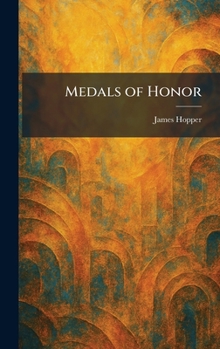
Medals of Honor

"Medals of Honor" is a compelling collection of narrative accounts detailing the extraordinary courage and selfless acts of American soldiers during World War I. Written by James Hopper, this work provides a vivid and deeply personal look at the individuals who received the United States' highest military decoration for valor in combat.
Through meticulous storytelling, the book captures the harrowing reality of the trenches, the chaos of the battlefield, and the moments of unparalleled bravery that defined a generation. Each chapter focuses on a different recipient, exploring the specific circumstances and heroic deeds that led to their commendation. From the Argonne Forest to the Marne, these stories serve as a testament to the resilience and spirit of the American doughboy.
A vital contribution to military history and biographical literature, "Medals of Honor" offers readers an intimate perspective on the Great War. It preserves the legacy of those who went above and beyond the call of duty, ensuring that their sacrifices and achievements continue to be remembered and honored. This work remains an essential read for anyone interested in the history of the Medal of Honor and the personal stories behind the Great War's most decorated heroes.
This work has been selected by scholars as being culturally important, and is part of the knowledge base of civilization as we know it. This work was reproduced from the original artifact, and remains as true to the original work as possible. Therefore, you may see the original copyright references, library stamps (as most of these works have been housed in our most important libraries around the world), and other notations in the work.
This work is in the public domain in the United States of America, and possibly other nations. Within the United States, you may freely copy and distribute this work, as no entity (individual or corporate) has a copyright on the body of the work.
As a reproduction of a historical artifact, this work may contain missing or blurred pages, poor pictures, errant marks, etc. Scholars believe, and we concur, that this work is important enough to be preserved, reproduced, and made generally available to the public. We appreciate your support of the preservation process, and thank you for being an important part of keeping this knowledge alive and relevant.
Customer Reviews
ThriftBooks ® and the ThriftBooks ® logo are registered trademarks of Thrift Books Global, LLC
