


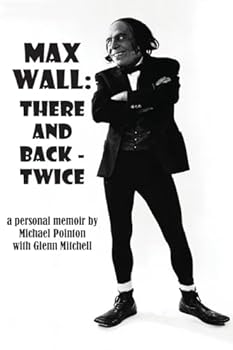
Max Wall: There and Back - Twice

Music-hall droll, dancer, verbal and visual comedian, musician, songwriter, star of radio and TV and ultimately a fine dramatic actor, Max Wall was one of Britain's most famous entertainers over a career spanning seven decades. He was also among the most imitated, with his eccentric Professor Wallofski' persona - a pianist in bald wig, black tights and big boots - familiar even to audiences who had never seen the real thing. Those who did see him in action knew they were watching a true master at work. He had first achieved fame as a dancer in the 1920s, appearing in Europe and, by the early 30s, the United States, where he began the move into comedy. In the 40s and 50s he was one of Britain's top names until personal problems, coupled with the rapid disappearance of the variety circuits, saw his career go into serious decline. By the end of the 1960s he was playing small clubs, often to indifferent or even hostile audiences. The following decade saw his return to acclaim in London's West End and a diversification into serious drama, notably as a favoured interpreter of the works of playwright Samuel Beckett.
Until now, the only book-length study of Max Wall's life has been his autobiography, long out of print and published before the later and most adventurous years of his undulating' - as he liked to put it - career. Max Wall: There and Back - Twice tells the whole story from the perspective of the close friend who did more than anyone to encourage his return to prominence, jazz musician Michael Pointon.
Customer Reviews
ThriftBooks® and the ThriftBooks® logo are registered trademarks of Thrift Books Global, LLC
