


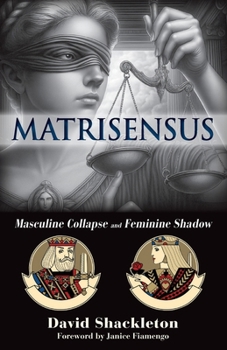
Matrisensus: Masculine Collapse and Feminine Shadow

Public life now runs on outrage, accusation, and moral escalation. Speech is policed, standards are contested, and conflicts are framed through harm and victimhood. Matrisensus argues that these developments stem from a single, largely unrecognized transformation in our moral culture.
Why has political disagreement become so hostile and absolute?
Why do online debates escalate instantly into denunciation and public shaming?
Why is free speech increasingly framed as harm?
Why do institutions respond to conflict by managing feelings rather than enforcing standards?
Why are social disputes so often cast in rigid victim-and-perpetrator narratives?
Rather than treating these developments as separate problems-in politics, media, education, law, or social movements-Matrisensus argues that they arise from a single underlying shift in how moral authority now operates.
As traditional expectations of responsibility, restraint, and earned authority weakened after the 1960s, they were gradually replaced by a new moral logic centered on emotional harm, identity, and protection. Disagreement became injury. Debate became aggression. Judgment became cruelty. Standards gave way to sensitivities; obligation gave way to grievance; authority gave way to moral signaling.
Drawing on history, psychology, myth, and lived experience, the book traces how this shift first reshaped family life and education, then expanded into courts, universities, workplaces, healthcare, and public discourse. Practices originally intended to reduce injustice hardened into systems that reward victim status, discourage competence, and treat boundaries as oppression. Institutions increasingly struggle to distinguish fairness from favoritism, care from control, and protection from coercion.
This is not an attack on compassion, nor a defense of past abuses of power. It is an attempt to describe-plainly and without ideology-what happens when the moral habits suited to family life are scaled up to govern entire societies, and when authority is expected to nurture rather than judge, protect rather than demand, and affirm rather than distinguish.
Written for readers who sense that something has gone wrong but are dissatisfied with partisan explanations, Matrisensus provides a framework for understanding why polarization deepens, speech narrows, conflicts intensify, and trust erodes-and why restoring cultural balance requires recovering responsibility, reciprocity, and limits alongside care.
Customer Reviews
ThriftBooks® and the ThriftBooks® logo are registered trademarks of Thrift Books Global, LLC
