


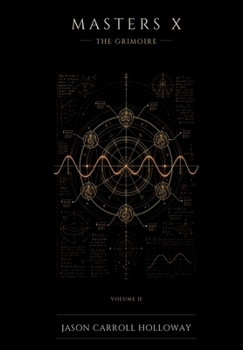
Masters X: The Grimoire

The frequency is real. Blake heard it in the Strahov crypt. It restructured his nervous system in a way that cannot be reversed. Now he sits in a stone cottage on the Icelandic coast, writing the account of what happened in the seventh Moleskine with a pen that shakes when he sets it down. Bilateral tremor. 111.2 Hz. Permanent.
What he is writing is both confession and instruction manual.
The Premonstratensian monks did not simply guard the frequency. They prepared for it. A fifteenth-century reading list recovered from a Charles University archive reveals twenty-three texts (Christian, Jewish, Hermetic, Islamic) required before any candidate could enter the crypt. The Ars Notoria. The Sefer Yetzirah. The Gospel of Mary. Twenty-three books to tune the mind before the frequency tuned the body.
While Blake maps the preparation protocol from Iceland, Nadia holds the Masters Foundation together from Kansas City, alone, at 5:12 every morning. She manages seventeen meetings, four grant deadlines, a Senate inquiry, a company filing patents on the research she is trying to keep free, and the slow irreversible transformation of a marriage into an interference pattern between two frequencies that are half a hertz apart.
Blake's measurements have found something no one expected. He takes a spectrum analyzer into the cathedrals and the stone answers in the same narrow band as the crypt: Chartres at 108 Hz in the nave, generated not by its height but by its width. Andrew's models say it was never engineered to. Cathedral acoustics are emergent, the inevitable consequence of what stone and space do to sound, and only the Strahov specifications made it intentional. Which is the stranger answer.
The preparation is not about the frequency. The preparation is about the organism that will receive the frequency.
Twenty-three candidates are waiting.
Customer Reviews
ThriftBooks ® and the ThriftBooks ® logo are registered trademarks of Thrift Books Global, LLC
