


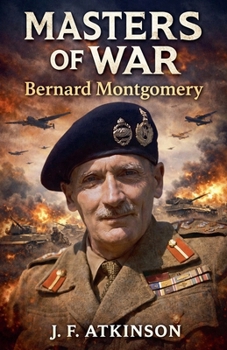
Masters of War: Bernard Montgomery

Masters of War: Bernard Montgomery
A Balanced Account of Britain's Most Controversial Commander
Field Marshal Bernard Law Montgomery, 1st Viscount Montgomery of Alamein, remains one of the most debated military figures of the twentieth century. The hero of El Alamein, architect of D-Day, and the general who accepted Germany's surrender in 1945, yet also a man whose difficult personality, controversial decisions, and strained relationships with Allied commanders have sparked arguments for decades.
This comprehensive biography cuts through the mythology and controversy to present an honest, balanced assessment of Montgomery's life and military career. From his difficult Victorian childhood and formative experiences in the trenches of World War I, through his transformation of the Eighth Army in the deserts of North Africa, to his final campaigns in Northwest Europe and his post-war roles in occupied Germany and NATO, this account examines the man behind the legend.
Drawing on extensive historical records, this book examines Montgomery's campaigns in unprecedented detail: the planning and execution of major battles, the controversies surrounding operations like Caen and the Falaise Gap, the debates about his strategic vision, and the evolution of his military methods. It analyzes his distinctive leadership style, his "grip" on operations, his visible command presence, his systematic methods while honestly acknowledging both their effectiveness and their limitations.
Beyond military operations, this biography explores Montgomery as a complete figure: his personal life marked by tragedy, his intellectual development as a military thinker, his post-war contributions to NATO, and his later years spent defending his reputation through controversial memoirs. It examines how his Victorian upbringing shaped his character, how World War I experiences forged his military philosophy, and how his complex personality both enabled great achievements and created unnecessary difficulties.
Masters of War: Bernard Montgomery presents neither hagiography nor condemnation, but rather an honest assessment of a skilled professional soldier whose significant achievements were matched by genuine limitations. It acknowledges that Montgomery won important battles through systematic methods while also recognizing that his caution sometimes prevented more decisive victories. It credits his exceptional abilities in training and morale-building while admitting his failures in coalition warfare and diplomatic communication.
Customer Reviews
ThriftBooks® and the ThriftBooks® logo are registered trademarks of Thrift Books Global, LLC
