


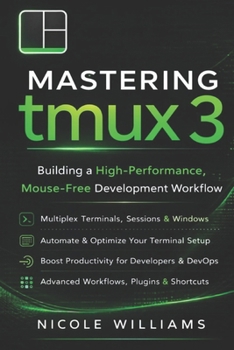
Mastering tmux 3: Building a High-Performance, Mouse-Free Development Workflow

Modern development work rarely happens in a single terminal window. A typical day involves SSH sessions into remote machines, long-running builds, log streams that need constant monitoring, editors running inside terminals, and background processes that must remain alive even when the network drops. Many developers discover tmux precisely because of these realities-but once they begin using it, they quickly realize something else: tmux is powerful, but its real potential is hidden behind layers of commands, configuration, and workflow patterns that most guides barely explain.
What begins as a simple attempt to split a terminal window often turns into a frustrating experience. Sessions disappear when they are not managed correctly. Key bindings conflict with existing habits. Panes multiply without structure. Remote work over SSH becomes cluttered rather than organized. And instead of becoming faster, the terminal becomes something developers constantly fight against.
This book exists to solve those problems.
Mastering tmux 3: Building a High-Performance, Mouse-Free Development Workflow is a practical, deeply informed guide to turning tmux into the control center of your development environment. Rather than treating tmux as just another command-line utility, this book shows how it was designed to support an entirely different way of working-one where the keyboard becomes the primary interface for navigating complex systems, managing multiple tasks, and maintaining persistent development environments across machines.
Inside these pages, tmux is approached the way experienced engineers actually use it: as a long-running workspace that survives reboots, network interruptions, and context switches. You will learn how to structure sessions so that projects remain organized, how to design pane layouts that support real development tasks, and how to move effortlessly between servers, editors, and running processes without losing your mental focus.
The book goes far beyond basic commands. It explores the deeper mechanics that make tmux so effective: the client-server architecture that allows sessions to persist independently of your terminal, the configuration system that enables powerful customization, and the workflow patterns that experienced users rely on to keep complex development environments under control.
You will see how tmux fits naturally into modern engineering work-whether you are managing remote infrastructure over SSH, running test suites while editing code, monitoring logs across services, or building a keyboard-driven environment that keeps your hands away from the mouse and your attention on the work itself.
Along the way, you will learn how to:
build persistent tmux workspaces that survive disconnections and system restarts
design keyboard-driven workflows that dramatically reduce context switching
manage complex pane and window layouts for real development tasks
create reusable configurations that turn tmux into a tailored development environment
integrate tmux seamlessly with tools like Vim, Neovim, SSH, and modern terminal environments
troubleshoot the subtle behaviors that often confuse new users
What makes tmux powerful is not simply its ability to split terminals. It is the way it allows developers to structure their entire working environment-to treat the terminal not as a temporary window, but as a persistent system where projects live and evolve.
For developers who spend hours each day inside the command line, mastering tmux is not just about convenience. It is about reclaiming focus, eliminating friction, and building a workflow that keeps pace with the complexity of modern software development.
This book is written for those who want to do exactly that.
Customer Reviews
ThriftBooks® and the ThriftBooks® logo are registered trademarks of Thrift Books Global, LLC
