


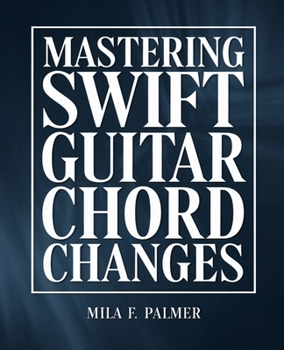
Mastering Swift Guitar Chord Changes: Seamlessly Transition Between Chords with This Essential Manual
No Customer Reviews

Mastering swift guitar chord changes can be one of the most rewarding yet challenging aspects of playing the guitar. I remember when I first picked up the instrument; I was so eager to strum my favorite songs, but the constant struggle with chord transitions often left me frustrated. It felt like my fingers had a mind of their own, stubbornly refusing to cooperate. However, with practice and a few helpful strategies, I learned how to make those transitions smoother, and I'd love to share some insights that might help you too. First and foremost, it's crucial to understand the importance of muscle memory. When I was starting out, I found that repeating chord changes over and over helped my fingers remember their positions. I would sit in my room for hours, playing simple progressions like G to C or D to A. It was tedious at times, but eventually, my fingers began to move more fluidly. I suggest picking a few basic chord progressions and practicing them daily. Another technique that worked wonders for me was breaking down the changes into smaller parts. Instead of trying to switch from one chord to another in one fell swoop, I would focus on just one finger at a time. For instance, if I was moving from an E minor to a G major, I'd concentrate on moving my index finger first before worrying about the others. This approach made the process feel less overwhelming and allowed me to focus on precision. I can't stress enough how important it is to use a metronome. When I finally started incorporating one into my practice sessions, everything changed. It helped me maintain a steady tempo and forced me to be more mindful of my timing. At first, I struggled to keep up, but gradually, I learned to play along with the clicks, which improved my timing and rhythm significantly. Listening to music and playing along with your favorite songs can also be incredibly beneficial. I often found myself jamming along with artists I admired, and it made practicing feel less like a chore and more like a fun activity. It's amazing how much one can learn just by ear, and it helps you to feel the music, which is just as important as technical skill. Lastly, don't forget the power of collaboration. Playing with friends or joining a local jam session can expose you to different styles and techniques. I vividly remember my first jam with a group of musicians; it was both intimidating and exhilarating. Their diverse playing styles pushed me to adapt quickly and think on my feet, which ultimately improved my chord transitions. In conclusion, mastering swift chord changes takes time and patience, but it's an essential skill that opens up a world of musical possibilities. Embrace the journey, practice regularly, and don't hesitate to seek out opportunities to play with others. With dedication and a little creativity, you'll find yourself transitioning between chords with ease before you know it. Happy strumming
Format:Paperback
Language:English
ISBN:B0DPCVZ3Y6
ISBN13:9798301600494
Release Date:November 2024
Publisher:Independently Published
Length:78 Pages
Weight:0.33 lbs.
Dimensions:0.2" x 7.5" x 9.3"
Customer Reviews
0 rating
Copyright © 2026 Thriftbooks.com
Terms of Use | Privacy Policy | Do Not Sell/Share My Personal Information | Cookie Policy | Cookie Preferences | Accessibility Statement
ThriftBooks ® and the ThriftBooks ® logo are registered trademarks of Thrift Books Global, LLC
ThriftBooks ® and the ThriftBooks ® logo are registered trademarks of Thrift Books Global, LLC
