


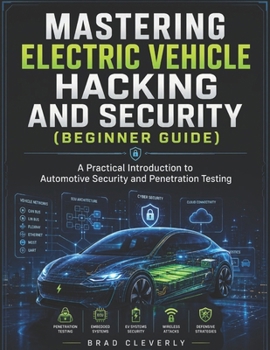
Mastering Electric Vehicle Hacking and Security (Beginner Guide): A Practical Introduction to Automotive Security and Penetration Testing

Mastering Electric Vehicle Hacking and Security (Beginner Guide) is a modern, technically grounded introduction to the rapidly evolving field of electric vehicle cybersecurity. As vehicles become increasingly connected, software-driven, and dependent on complex electronic systems, the need for professionals who understand automotive security has grown dramatically across the automotive, cybersecurity, and mobility industries. This book was written to provide a structured and practical learning path into that world.
Designed for beginners, aspiring automotive security researchers, cybersecurity professionals, engineers, students, ethical hackers, penetration testers, and technology enthusiasts, this book explains how electric vehicle systems operate and how security weaknesses can emerge across embedded electronics, wireless interfaces, charging infrastructure, cloud services, and vehicle communication networks. The material is presented in a professional and accessible manner, making advanced concepts easier to understand without sacrificing technical depth.
Readers will learn the foundations of electric vehicle architecture, including ECUs, battery management systems, onboard electronics, automotive operating systems, embedded platforms, and modern software-defined vehicle technologies. The book explains how automotive communication protocols function, including CAN, CAN FD, Automotive Ethernet, UDS diagnostics, DoIP, V2X systems, and telematics communication.
Beyond the fundamentals, the book introduces professional penetration testing methodologies used in automotive environments. Readers will explore threat modeling, attack surface identification, automotive reverse engineering, firmware analysis, ECU security assessment, fuzz testing, and network reconnaissance techniques commonly used during vehicle security evaluations. Practical coverage of wireless attack surfaces, mobile applications, infotainment systems, OTA updates, charging infrastructure, cloud ecosystems, and connected fleet technologies helps readers understand how modern attack chains are built and defended against in real-world scenarios.
The book also examines defensive engineering practices, secure development principles, cryptography, secure boot systems, intrusion detection mechanisms, automotive security operations, incident response, and compliance frameworks relevant to modern electric vehicles. Readers gain insight into both offensive and defensive perspectives, creating a balanced understanding of how security research supports safer and more resilient transportation systems.
Advanced chapters discuss emerging areas such as AI-assisted security analysis, autonomous driving system risks, smart grid integration, cloud-native EV infrastructures, supply chain security, and future automotive cybersecurity trends. Real-world research examples and professional workflows are included throughout the book to help readers understand how automotive security professionals approach testing, analysis, and vulnerability discovery in controlled and ethical environments.
Whether the goal is to enter the automotive cybersecurity industry, strengthen embedded systems knowledge, build practical EV security skills, or better understand the technologies shaping the future of transportation, this book provides a comprehensive and professionally structured foundation for learning electric vehicle hacking and security from the ground up.
Customer Reviews
ThriftBooks ® and the ThriftBooks ® logo are registered trademarks of Thrift Books Global, LLC
