


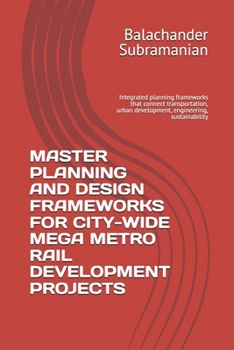
Master Planning and Design Frameworks for City-Wide Mega Metro Rail Development Projects: Integrated planning frameworks that connect transportation,
No Customer Reviews

Metro rail systems have emerged as the defining transportation infrastructure of modern metropolitan regions. As cities continue to experience unprecedented population growth, rapid urbanization, increasing mobility demands, environmental pressures, and economic transformation, traditional transportation networks are struggling to accommodate future requirements. Mega cities across the world are investing heavily in integrated metro rail systems to create sustainable, resilient, and future-ready mobility ecosystems capable of supporting long-term urban development. However, the successful delivery of a city-wide metro rail network requires far more than engineering excellence. It demands comprehensive master planning, strategic visioning, transportation modeling, corridor development, land-use integration, urban regeneration, multimodal connectivity, environmental stewardship, economic analysis, stakeholder engagement, and long-term governance frameworks. The complexity of modern metro rail projects has transformed them into city-building initiatives that shape the economic, social, and environmental future of entire metropolitan regions. This book, Master Planning and Design Frameworks for City-Wide Mega Metro Rail Development Projects, has been developed to provide a structured and practical framework-based approach to planning and designing large-scale metro rail systems. It consolidates internationally recognized best practices, strategic planning methodologies, transportation planning principles, urban development strategies, and infrastructure delivery approaches into a single comprehensive reference. The book presents an integrated collection of thirty specialized frameworks covering the entire master planning and design lifecycle of metro rail development. These frameworks range from strategic vision development and metropolitan mobility planning to corridor identification, route alignment selection, depot planning, station integration, utility coordination, right-of-way management, urban regeneration, and future network expansion planning. Unlike traditional transportation planning guides that focus on isolated technical disciplines, this publication adopts a systems-based approach that recognizes metro rail as the backbone of metropolitan mobility and urban transformation. Every framework has been designed to support informed decision-making, multidisciplinary coordination, risk reduction, stakeholder alignment, and long-term infrastructure optimization.
The methodologies presented in this book are applicable to: Greenfield metro systemsBrownfield urban transit projectsMetropolitan rail expansionsAirport metro programsRegional rail integration projectsTransit-oriented development initiativesSmart city mobility programsSustainable transportation strategiesFuture-ready transportation ecosystemsThe frameworks contained within this publication have been organized into logical planning domains including: Strategic Planning FrameworksDemand Forecasting and Transportation Analysis FrameworksRoute Alignment and Corridor Planning FrameworksMetro Network Development FrameworksTransit-Oriented Development FrameworksMultimodal Integration FrameworksUrban Regeneration FrameworksSustainability and Smart Mobility FrameworksInfrastructure Planning FrameworksGovernance and Implementation FrameworksCollectively, these frameworks establish a holistic methodology for planning metro rail systems that are technically robust, financially sustainable, environmentally responsible, socially inclusive, and operationally efficient.
The methodologies presented in this book are applicable to: Greenfield metro systemsBrownfield urban transit projectsMetropolitan rail expansionsAirport metro programsRegional rail integration projectsTransit-oriented development initiativesSmart city mobility programsSustainable transportation strategiesFuture-ready transportation ecosystemsThe frameworks contained within this publication have been organized into logical planning domains including: Strategic Planning FrameworksDemand Forecasting and Transportation Analysis FrameworksRoute Alignment and Corridor Planning FrameworksMetro Network Development FrameworksTransit-Oriented Development FrameworksMultimodal Integration FrameworksUrban Regeneration FrameworksSustainability and Smart Mobility FrameworksInfrastructure Planning FrameworksGovernance and Implementation FrameworksCollectively, these frameworks establish a holistic methodology for planning metro rail systems that are technically robust, financially sustainable, environmentally responsible, socially inclusive, and operationally efficient.
Format:Paperback
Language:English
ISBN:B0H3T5V6KC
ISBN13:9798199671187
Release Date:June 2026
Publisher:Independently Published
Length:682 Pages
Weight:1.98 lbs.
Dimensions:1.4" x 6.0" x 9.0"
Customer Reviews
0 rating
Copyright © 2026 Thriftbooks.com
Terms of Use | Privacy Policy | Do Not Sell/Share My Personal Information | Cookie Policy | Cookie Preferences | Accessibility Statement
ThriftBooks ® and the ThriftBooks ® logo are registered trademarks of Thrift Books Global, LLC
ThriftBooks ® and the ThriftBooks ® logo are registered trademarks of Thrift Books Global, LLC
