


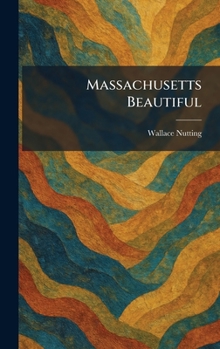
Massachusetts Beautiful

"Massachusetts Beautiful" is an evocative exploration of the scenic landscapes and architectural heritage of the Bay State, authored and illustrated by the renowned photographer and historian Wallace Nutting. As part of his celebrated series dedicated to the beauty of the American states, this work provides a comprehensive pictorial record of Massachusetts in the early 20th century. Nutting's expert eye captures the serene atmosphere of rural life, from the rocky shores of the Atlantic to the pastoral hills of the Berkshires.
Through a collection of detailed photographs and descriptive prose, the book highlights the enduring charm of New England, focusing on historic landmarks, old homesteads, and the natural splendor of the countryside. Nutting's artistic vision emphasizes a sense of tranquility and tradition, preserving the aesthetic essence of a region rich in history and culture. "Massachusetts Beautiful" remains a valuable resource for those interested in regional history, landscape photography, and the preservation of American heritage. It offers a nostalgic yet profound appreciation for the landscapes that have shaped the identity of Massachusetts.
This work has been selected by scholars as being culturally important, and is part of the knowledge base of civilization as we know it. This work was reproduced from the original artifact, and remains as true to the original work as possible. Therefore, you may see the original copyright references, library stamps (as most of these works have been housed in our most important libraries around the world), and other notations in the work.
This work is in the public domain in the United States of America, and possibly other nations. Within the United States, you may freely copy and distribute this work, as no entity (individual or corporate) has a copyright on the body of the work.
As a reproduction of a historical artifact, this work may contain missing or blurred pages, poor pictures, errant marks, etc. Scholars believe, and we concur, that this work is important enough to be preserved, reproduced, and made generally available to the public. We appreciate your support of the preservation process, and thank you for being an important part of keeping this knowledge alive and relevant.
Customer Reviews
ThriftBooks ® and the ThriftBooks ® logo are registered trademarks of Thrift Books Global, LLC
