


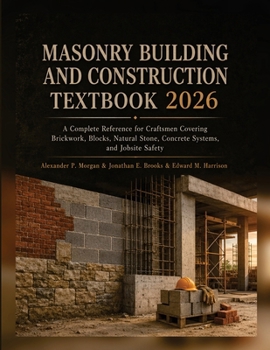
Masonry Building and Construction Textbook 2026: A Complete Reference for Craftsmen Covering Brickwork, Blocks, Natural Stone, Concrete Systems, and J

A masonry wall can look finished long before you know whether it was built well.
The difference is found in the details: material selection, preparation, alignment, bonding, joints, workmanship, structural connections, moisture management, and the decisions made while the work is still underway.
MASONRY BUILDING AND CONSTRUCTION TEXTBOOK 2026 is a substantial 424-page reference developed for readers who want to understand masonry as a working construction trade-not merely recognize bricks and blocks.
From traditional brickwork and concrete masonry units to natural stone and concrete applications, the book brings together the materials, methods, and jobsite thinking behind dependable masonry construction.
Readers can develop a stronger working understanding of:
- Brick, block, natural-stone, and concrete construction practices
- How masonry materials influence preparation and workmanship
- Layout, alignment, bonding, and construction-detail considerations
- The relationship between individual units, mortar, joints, and completed wall systems
- Practical thinking for producing consistent, durable work
- Construction-site practices where organization and safety cannot be separated from craftsmanship
- The principles that help turn drawings, measurements, materials, and field instructions into finished construction
This textbook is suited to apprentices, masonry students, tradespeople, contractors, construction personnel, and experienced workers who want a substantial reference close at hand.
Masonry rewards precision. Small errors repeated across a wall become large errors; careful work repeated consistently becomes craftsmanship.
Whether you are learning the trade, strengthening existing skills, or refreshing the principles behind familiar work, this book is designed to keep the emphasis where it belongs: on understanding the material and building it correctly.
Bring MASONRY BUILDING AND CONSTRUCTION TEXTBOOK 2026 to the classroom, workshop, or jobsite-and make every course, joint, and detail part of work built to last.
Customer Reviews
ThriftBooks ® and the ThriftBooks ® logo are registered trademarks of Thrift Books Global, LLC
