


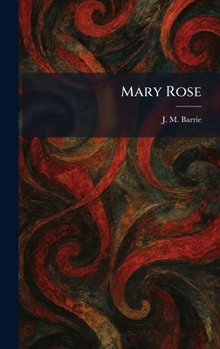
Mary Rose

"Mary Rose" is a haunting and ethereal supernatural drama by J.M. Barrie, the celebrated creator of "Peter Pan". This atmospheric play delves into the eerie mystery of a young woman who disappears on a remote, mythical Scottish island known in local folklore as "The Island that Likes to be Visited." When she miraculously reappears decades later, she has not aged a single day, remaining blissfully unaware of the passage of time while her husband, parents, and son have grown old and moved on with their lives.
Blending elements of a traditional ghost story with a poignant exploration of loss and the fragility of human connections, "Mary Rose" captures a profound sense of otherworldly longing. Barrie masterfully weaves a tale of suspense and melancholy, questioning the nature of memory and the painful reality of time's relentless march. As the protagonist struggles to reconcile her youthful spirit with a world that has aged beyond her recognition, the work evokes a chilling yet beautiful reflection on the mysteries that lie just beyond the reach of human understanding.
A masterpiece of early 20th-century theater, "Mary Rose" remains a compelling work for those fascinated by folklore, the paranormal, and the psychological depths of the human experience.
This work has been selected by scholars as being culturally important, and is part of the knowledge base of civilization as we know it. This work was reproduced from the original artifact, and remains as true to the original work as possible. Therefore, you may see the original copyright references, library stamps (as most of these works have been housed in our most important libraries around the world), and other notations in the work.
This work is in the public domain in the United States of America, and possibly other nations. Within the United States, you may freely copy and distribute this work, as no entity (individual or corporate) has a copyright on the body of the work.
As a reproduction of a historical artifact, this work may contain missing or blurred pages, poor pictures, errant marks, etc. Scholars believe, and we concur, that this work is important enough to be preserved, reproduced, and made generally available to the public. We appreciate your support of the preservation process, and thank you for being an important part of keeping this knowledge alive and relevant.
Related Subjects
DramaCustomer Reviews
ThriftBooks ® and the ThriftBooks ® logo are registered trademarks of Thrift Books Global, LLC
