


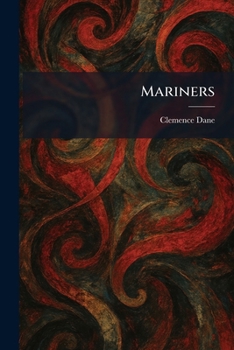
Mariners

"Mariners" is a compelling three-act play by the celebrated English dramatist and novelist Clemence Dane. Set in a rural English parish, the work delves into the intricate and often painful dynamics of a long-term marriage. The story centers on the Reverend Benjamin Shepperley, a devoted clergyman, and his wife Ann, whose social anxieties and perceived failures create a domestic environment fraught with tension and misunderstanding.
Through sharp dialogue and keen psychological insight, Dane explores the sacrifices made in the name of duty and the isolation that can exist even within the closest of bonds. The play examines the clash between individual desires and the rigid expectations of early 20th-century society. As the characters navigate their emotional struggles, "Mariners" serves as a poignant meditation on love, resentment, and the search for redemption.
Renowned for her ability to portray complex female characters and the nuances of British social life, Clemence Dane delivers a powerful narrative that remains relevant for its honest depiction of human relationships. This work is an essential piece of 20th-century British drama, showcasing Dane's talent for blending social commentary with profound emotional depth.
This work has been selected by scholars as being culturally important, and is part of the knowledge base of civilization as we know it. This work was reproduced from the original artifact, and remains as true to the original work as possible. Therefore, you may see the original copyright references, library stamps (as most of these works have been housed in our most important libraries around the world), and other notations in the work.
This work is in the public domain in the United States of America, and possibly other nations. Within the United States, you may freely copy and distribute this work, as no entity (individual or corporate) has a copyright on the body of the work.
As a reproduction of a historical artifact, this work may contain missing or blurred pages, poor pictures, errant marks, etc. Scholars believe, and we concur, that this work is important enough to be preserved, reproduced, and made generally available to the public. We appreciate your support of the preservation process, and thank you for being an important part of keeping this knowledge alive and relevant.
Customer Reviews
ThriftBooks ® and the ThriftBooks ® logo are registered trademarks of Thrift Books Global, LLC
