


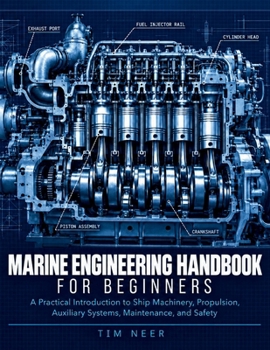
Marine Engineering Handbook for Beginners: A Practical Introduction to Ship Machinery, Propulsion, Auxiliary Systems, Maintenance, and Safety

Understand what the engine room is telling you, one connected system at a time.
Knowing the names of engines, pumps and generators is a useful start. The next challenge is explaining how they work together, what a changing reading means and why a fault in one service can affect several others. A beginner needs a clear way to connect engineering theory with the behaviour of the whole plant.
This handbook builds that foundation through fifteen chapters covering propulsion, support circuits, ship services and professional practice. Explanations, simplified diagrams, tables and worked calculations show how the principles apply. Practice problems with answers help you test your reasoning, while a recurring method of tracing energy, fluids and control signals keeps the topics connected.
Follow fuel, lubricating oil, cooling water and air through their circuits, recognising how each service supports engine function and changes the meaning of a symptom.Compare four-stroke and two-stroke diesel engines, then connect their power output with gears, shafting, bearings, propeller thrust and operating load.Work through calculations for power, torque, pressure, flow and heat transfer, checking units, assumptions and the physical meaning of the result.Explore pumps, electrical generation and distribution, hydraulic steering and thermal services through their operating relationships and useful measurements.Study maintenance and fault examples that verify indications, compare plausible causes, use condition trends and check restored function after corrective work.Understand isolation, stored energy, standby readiness, watch handover and accurate records as parts of responsible technical practice.Key topics include combustion, turbocharging, starting air, piping and valves, bilge and ballast systems, boilers, steam and freshwater production. Refrigeration, ventilation, deck machinery and environmental services extend the discussion beyond the main engine. Pollution prevention and energy-efficiency examples connect everyday equipment condition with the wider ship, while alternative fuels, batteries and hybrid propulsion introduce changing technology and its hazards.
Learning objectives and chapter summaries support a structured first reading. Formula and symbol tables, a glossary and regional unit conversions provide reference material for returning to a calculation or unfamiliar term. Throughout, the emphasis is on following the system and interpreting evidence before drawing conclusions about a component.
Written for engine cadets, first-year students, technically curious seafarers and readers beginning machinery-space study, this is an educational foundation for use alongside supervised training, approved vessel procedures and equipment manuals. The book explains principles and reasoning; actual settings, maintenance limits and operating actions require the current information for the vessel and equipment concerned.
Get your copy and begin tracing the systems behind the readings, then use the examples and questions to build a clearer understanding of the ship's engineering plant.
Customer Reviews
ThriftBooks ® and the ThriftBooks ® logo are registered trademarks of Thrift Books Global, LLC
