


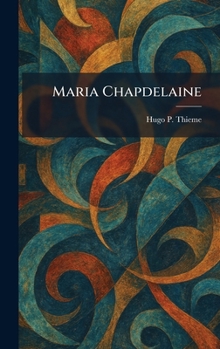
Maria Chapdelaine

"Maria Chapdelaine" is a cornerstone of Canadian literature, offering a poignant and realistic portrayal of pioneer life in the rugged wilderness of rural Quebec. Set in the early 20th century, the narrative follows Maria, a young woman living with her family in the isolated Lake Saint-Jean region. The story captures the relentless struggle against the harsh elements and the profound connection between the settlers and the land they strive to tame.
At the heart of the novel is Maria's difficult choice between three suitors, each representing a different destiny. She must weigh the romantic allure of the adventurous trapper Fran ois Paradis, the promise of a modern life in the United States offered by Lorenzo Surprenant, and the steady, familiar path of traditional farming with Eutrope Gagnon. Following a series of personal trials and family losses, Maria's ultimate decision becomes a testament to the endurance of heritage, faith, and the stoic resilience of the French-Canadian people.
Written with lyrical simplicity and deep emotional resonance, "Maria Chapdelaine" remains a powerful exploration of duty, tradition, and the search for belonging amidst an unforgiving landscape.
This work has been selected by scholars as being culturally important, and is part of the knowledge base of civilization as we know it. This work was reproduced from the original artifact, and remains as true to the original work as possible. Therefore, you may see the original copyright references, library stamps (as most of these works have been housed in our most important libraries around the world), and other notations in the work.
This work is in the public domain in the United States of America, and possibly other nations. Within the United States, you may freely copy and distribute this work, as no entity (individual or corporate) has a copyright on the body of the work.
As a reproduction of a historical artifact, this work may contain missing or blurred pages, poor pictures, errant marks, etc. Scholars believe, and we concur, that this work is important enough to be preserved, reproduced, and made generally available to the public. We appreciate your support of the preservation process, and thank you for being an important part of keeping this knowledge alive and relevant.
Customer Reviews
ThriftBooks ® and the ThriftBooks ® logo are registered trademarks of Thrift Books Global, LLC
