


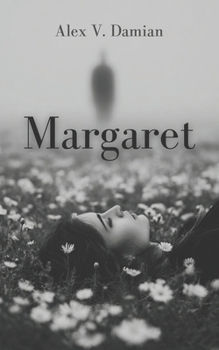
Margaret

What if death does not quiet the mind, but locks it forever into its final thought?
Margaret, an architect obsessed with form and control, believes she can design her own ending as precisely as the spaces she builds. She prepares the dress, the shoes, the rings, the chapel where she will be kept-every detail arranged to prevent strangers from shaping her body or her story. But death refuses her design.
Instead of silence, she enters a state where emotion persists without the distractions of living. Once a year, she can return for a single day-aware, unchanged, still carrying the exact configuration of feeling she had at the moment she left the world. She cannot stay. She cannot alter what she is. And the living continue to move, remember, and misremember her.
As Margaret navigates this strange interval between presence and disappearance, she encounters two men whose lives were marked by her in different ways. Their memories reshape the order she tried to impose, revealing a truth she spent her life avoiding: that architecture can discipline space, but not the heart.
Through precise psychological detail and a narrative that bends time rather than escaping it, Margaret explores how grief reorganises experience, how love persists as structure, and how death exposes the stories we believed were complete. It is a secular myth about what remains when the body ends, yet the self does not.Customer Reviews
ThriftBooks ® and the ThriftBooks ® logo are registered trademarks of Thrift Books Global, LLC
