


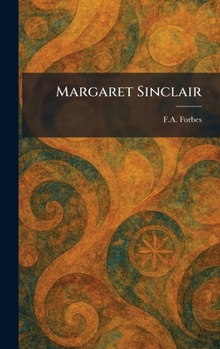
Margaret Sinclair

"Margaret Sinclair" is a moving and insightful biography of the Scottish factory worker who transitioned from the industrial labor of Edinburgh to the cloistered life of the Order of Poor Clares. Written by the acclaimed hagiographer F.A. Forbes, this work chronicles the brief but profoundly spiritual life of Margaret Sinclair (1900-1925), known in religion as Sister Mary Francis of the Five Wounds.
The narrative follows her journey from a working-class childhood to her humble service as an apprentice French polisher and union activist, eventually leading to her entry into the convent in London. Forbes captures the essence of Sinclair's spiritual path-a life of extraordinary holiness found within the most ordinary circumstances. The biography highlights her dedication to prayer, her selfless service to her family and colleagues, and her patient endurance of the illness that took her life at a young age. This work serves as a testament to the spiritual depth possible in the modern working world and remains a classic of Catholic biographical literature, offering readers an intimate look at the woman now declared Venerable by the Church.
This work has been selected by scholars as being culturally important, and is part of the knowledge base of civilization as we know it. This work was reproduced from the original artifact, and remains as true to the original work as possible. Therefore, you may see the original copyright references, library stamps (as most of these works have been housed in our most important libraries around the world), and other notations in the work.
This work is in the public domain in the United States of America, and possibly other nations. Within the United States, you may freely copy and distribute this work, as no entity (individual or corporate) has a copyright on the body of the work.
As a reproduction of a historical artifact, this work may contain missing or blurred pages, poor pictures, errant marks, etc. Scholars believe, and we concur, that this work is important enough to be preserved, reproduced, and made generally available to the public. We appreciate your support of the preservation process, and thank you for being an important part of keeping this knowledge alive and relevant.
Customer Reviews
ThriftBooks ® and the ThriftBooks ® logo are registered trademarks of Thrift Books Global, LLC
