


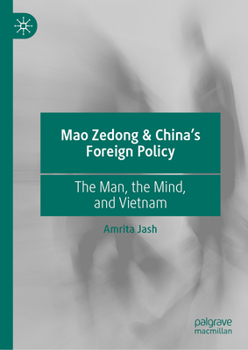
Mao Zedong & China's Foreign Policy: The Man, the Mind, and Vietnam
No Customer Reviews

This book analyses China's foreign policy from 1949 to 1976 through a cognitive-perceptual lens, emphasise Mao Zedong's central role as the primary decision making authority. Moving beyond realist frameworks, it highlights how Mao's ideological worldview--shaped by his 'theory of contradictions', revolutionary zeal, and use of historical analogies--drove China's foreign policy, particularly in relation to Vietnam. His subjective interpretation of global affairs, reinforced by Marxist-Leninist principles and China's historical identity, guided key strategic decisions. The study underscores the importance of individual leaders' beliefs, perceptions, and psychological traits in shaping foreign policy, offering broader implications for understanding international relations through cognitive and psychological approaches.
Format:Hardcover
Language:English
ISBN:3031941993
ISBN13:9783031941993
Release Date:July 2025
Publisher:Palgrave MacMillan
Length:198 Pages
Weight:0.85 lbs.
Dimensions:0.8" x 6.0" x 7.9"
Customer Reviews
0 rating
Copyright © 2026 Thriftbooks.com Terms of Use
| Privacy Policy | Do Not
Sell/Share My Personal Information | Cookie Policy | Cookie Preferences | Accessibility Statement
ThriftBooks® and the ThriftBooks® logo are registered trademarks of Thrift Books Global, LLC
ThriftBooks® and the ThriftBooks® logo are registered trademarks of Thrift Books Global, LLC
