


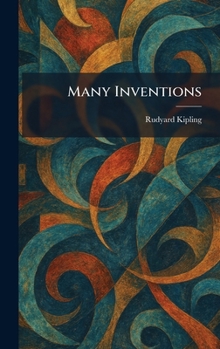
Many Inventions

"Many Inventions" is a vibrant and diverse collection of short stories that showcases the immense narrative range of Rudyard Kipling. Spanning across continents and genres, these tales delve into the lives of British soldiers, the mysteries of the sea, and the intersection of traditional myth and modern technology. The anthology features iconic characters such as the beloved soldiers Three-Mulvaney, Ortheris, and Learoyd-while also introducing readers to the supernatural and the gritty realities of London's East End.
Throughout this collection, Kipling explores themes of duty, human endurance, and the uncanny. Notable stories include "The Disturber of Traffic," a haunting tale of solitude at sea, and "In the Rukh," which marks the first appearance of Mowgli, the legendary feral child of the Indian jungle. These narratives are marked by Kipling's signature mastery of dialect, keen observation of character, and ability to weave intricate plots from the threads of everyday life. "Many Inventions" remains a testament to the author's imaginative power and his status as one of the preeminent storytellers of the late nineteenth and early twentieth centuries, offering a rich tapestry of experiences that continue to captivate readers today.
This work has been selected by scholars as being culturally important, and is part of the knowledge base of civilization as we know it. This work was reproduced from the original artifact, and remains as true to the original work as possible. Therefore, you may see the original copyright references, library stamps (as most of these works have been housed in our most important libraries around the world), and other notations in the work.
This work is in the public domain in the United States of America, and possibly other nations. Within the United States, you may freely copy and distribute this work, as no entity (individual or corporate) has a copyright on the body of the work.
As a reproduction of a historical artifact, this work may contain missing or blurred pages, poor pictures, errant marks, etc. Scholars believe, and we concur, that this work is important enough to be preserved, reproduced, and made generally available to the public. We appreciate your support of the preservation process, and thank you for being an important part of keeping this knowledge alive and relevant.
Customer Reviews
ThriftBooks ® and the ThriftBooks ® logo are registered trademarks of Thrift Books Global, LLC
