


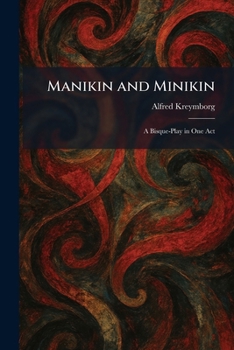
Manikin and Minikin: A Bisque-Play in One Act

"Manikin and Minikin, a Bisque-Play in One Act" is a charming and avant-garde work of modernist drama by Alfred Kreymborg. Set upon a mantelpiece, this delicate one-act play features two porcelain figurines-Manikin and Minikin-who come to life through a rhythmic, poetic dialogue. As they remain physically frozen in their bisque forms, their conversation explores profound themes of romantic devotion, the passage of time, and the contrast between the eternal nature of art and the fleeting reality of the human world.
Kreymborg's unique "bisque-play" style showcases his mastery of rhythmic language and his contribution to the experimental theater movements of the early 20th century. The play is characterized by its stylized interaction and musicality, blending elements of puppet theater with sophisticated literary sensibilities. Readers and performers alike will find "Manikin and Minikin" to be a compelling example of American poetic drama, offering a whimsical yet deeply contemplative look at the human condition through the eyes of two fragile, inanimate observers. This work remains a significant piece for those interested in the history of one-act plays and the development of 20th-century performance art.
This work has been selected by scholars as being culturally important, and is part of the knowledge base of civilization as we know it. This work was reproduced from the original artifact, and remains as true to the original work as possible. Therefore, you may see the original copyright references, library stamps (as most of these works have been housed in our most important libraries around the world), and other notations in the work.
This work is in the public domain in the United States of America, and possibly other nations. Within the United States, you may freely copy and distribute this work, as no entity (individual or corporate) has a copyright on the body of the work.
As a reproduction of a historical artifact, this work may contain missing or blurred pages, poor pictures, errant marks, etc. Scholars believe, and we concur, that this work is important enough to be preserved, reproduced, and made generally available to the public. We appreciate your support of the preservation process, and thank you for being an important part of keeping this knowledge alive and relevant.
Customer Reviews
ThriftBooks ® and the ThriftBooks ® logo are registered trademarks of Thrift Books Global, LLC
