


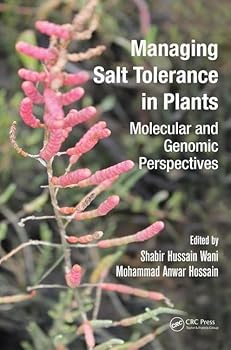
Managing Salinity Tolerance in Plants: Molecular and Genomic Perspectives
No Customer Reviews

Salinity stress currently impacts more than 80 million hectares of land worldwide and more arable land is likely to be impacted in the future due to global climate changes. Managing Salt Tolerance in Plants: Molecular and Genomic Perspectives presents detailed molecular and genomic approaches for the development of crop plants tolerant to salinity stress. The book discusses salinity stress in plant adaptation and productivity, biochemical and molecular mechanisms responsible for plant salt tolerance, and genomic approaches for the development of plants tolerant to salinity stress. With chapters written by leading scientists involved in plant salinity stress research, this book brings together biochemical, physiological, and molecular techniques used to develop crop plants with increased salinity tolerance. The editors integrate the most recent findings about the key biological determinants of salinity stress tolerance with contemporary crop improvement approaches. They include emerging topics and cutting-edge knowledge related to salt stress responses and tolerance mechanisms and describe salinity stress in plants and its effects on plant growth and productivity. Time is of the essence for this issue, as global climate change will further exacerbate the problems of salt stress in the near future. With authoritative coverage of the key factors impacting the world's crop production, this book calls attention to primary genetic, physiological, and biochemical factors of plant salinity stress. It helps you develop conventional and biotechnological applications that can lead to enhanced crop productivity in stressful environments.
Format:Hardcover
Language:English
ISBN:1482245132
ISBN13:9781482245134
Release Date:October 2015
Publisher:CRC Press
Length:434 Pages
Weight:2.10 lbs.
Dimensions:1.1" x 7.1" x 10.1"
Related Subjects
Engineering Science Science & Math Science & Scientists Science & Technology TechnologyCustomer Reviews
0 rating
Copyright © 2026 Thriftbooks.com Terms of Use
| Privacy Policy | Do Not
Sell/Share My Personal Information | Cookie Policy | Cookie Preferences | Accessibility Statement
ThriftBooks® and the ThriftBooks® logo are registered trademarks of Thrift Books Global, LLC
ThriftBooks® and the ThriftBooks® logo are registered trademarks of Thrift Books Global, LLC
