


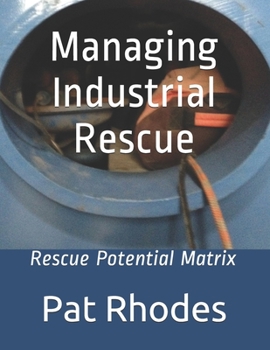
Managing Industrial Rescue: Rescue Potential Matrix
No Customer Reviews

Performing a safe and expedient rescue is one of the most misunderstood concepts in our modern industrial society. Workers simply don't know what they don't know in an unplanned attempt of moving an incapacitated human in a challenging environment. Confined space statistics bear this out. Year after year approximately 60% of confined space fatalities are to would-be rescuers. Specifically, coworkers are attempting rescues with little or no training. They are relying on their hyper-adrenalin state of panic and their ill-fated perception of human strength. The preferred alternative is to develop a rescue program that is based on employee capabilities, and the environmental factors of the workplace and at the same time, develop a working relationship with the local fire/rescue component. Conversely, over reliance of the fire service to save the day plays into this rescue misunderstanding. The fire service will provide substantial emergency medical support and, at times, technical rescue help. Ultimately, the fire service is extremely reliant on the subject matter expertise within the worksite. When the subject matter experts are trained in worksite specific rescue and concise rescue plan development the outcome is greatly enhanced.The purpose of this guide it to arm the employer with the tools that will help determine the level of training and equipment needed at specific worksites. Additionally, the development of rescue plans is addressed in the guide.
Format:Paperback
Language:English
ISBN:B08DDJVL8X
ISBN13:9798669523749
Release Date:July 2020
Publisher:Independently Published
Length:104 Pages
Weight:0.58 lbs.
Dimensions:0.2" x 8.5" x 11.0"
Customer Reviews
0 rating
Copyright © 2026 Thriftbooks.com Terms of Use
| Privacy Policy | Do Not
Sell/Share My Personal Information | Cookie Policy | Cookie Preferences | Accessibility Statement
ThriftBooks® and the ThriftBooks® logo are registered trademarks of Thrift Books Global, LLC
ThriftBooks® and the ThriftBooks® logo are registered trademarks of Thrift Books Global, LLC
