


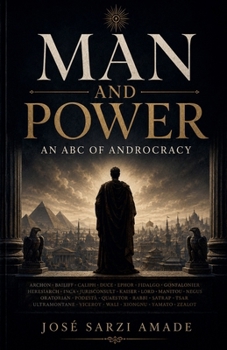
Man and Power: An ABC of Androcracy

The reading of this abecedary will not provide answers nor clarification regarding the mechanisms of power in themselves. Here, the result is modest. It is only the fruit of an initial curiosity surrounding the following question: can one produce an abecedary on masculine power and its functions, titles, or situations? Yes, for this work is its outcome. situations? Yes, for this work is its outcome.
Presented in twenty-six alphabetical entries on "leadership," inherent more to a bygone power than a current one, the reader will therefore have a very succinct overview-each term having been confined to more or less one page-though didactic, of a denomination associated with androcracy. Moreover, a few bibliographical references have been added at the end of this abecedary for those who would like to know more.
The different alphabetical entries, in their selection, are multilingual and disparate. They thus cover a singular and international panorama insofar as they deal, in a mixed manner, with authoritarian functions: French, English, Italian, Greek, Japanese, Chinese, but also Islamic, Christian, Jewish, animist, etc.
Customer Reviews
ThriftBooks ® and the ThriftBooks ® logo are registered trademarks of Thrift Books Global, LLC
