
Skip to content
Scan a barcode
Scan
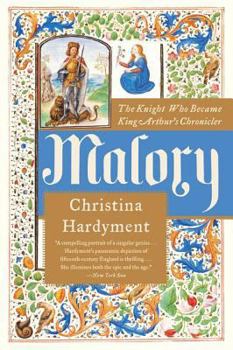
Paperback Malory: The Knight Who Became King Arthur's Chronicler Book

ISBN: 0060935294

ISBN13: 9780060935290

Malory: The Knight Who Became King Arthur's Chronicler

Select Format

Select Condition ThriftBooks Help Icon

Recommended

Format: Paperback

Condition: Very Good

$9.19
Save $10.80!
List Price $19.99
Almost Gone, Only 1 Left!

Book Overview

Virtually all modern versions of the legend of King Arthur and his Knights of the Round Table are derived from a single book: Sir Thomas Malory's Morte d'Arthur (1469), one of the world's most renowned literary works. Yet the author, a fifteenth-century knight, has remained an enigma for centuries. Existing historical records imply that Malory was a criminal--accused of rape, ambush, rustling, and attacks on abbeys--and was imprisoned for most of his life.

Using evidence from new historical research and deductions from the only known manuscript copy of Malory's celebrated work, Christina Hardyment brilliantly resolves the contradictions about an extraordinary man and a life marked equally by great achievement and devastating disgrace. Malory is the fascinating chronicle of a loyal soldier enmeshed in the tangled politics of the Wars of the Roses. It is the story of a connoisseur of literature and exemplary writer who created a masterpiece meant to inspire princes and knights to high endeavors and noble acts.

Customer Reviews

1 rating

plenty here for the historians and the literary historians, too

This is a book that general audiences can have hours of fun reading and historians, literary historians, Arthurians, and other scholars of all shades can have hours of fun arguing about (and I draw from personal experience). Most impressive is Hardyment's full-scale, detailed look at the context of the world in which Malory lived and wrote, exploring its political pressures, its social conventions, its cultural attitudes, and the ways it sought to authenticate itself. She's also adept at managing the physical evidence, reproducing for us (in word pictures and fine visual additions) the materiality of the world: its houses, its armor, its food, its diseases. She admits where her conclusions are romantic speculations (imagining Malory's amorous intrigues and/or military commitments) but places them within the context of existing evidence. The extensive endnotes and bibliography prove she's done her research and documented her sources. Literary critics might be hesitant to read as much of Malory's own personal attitudes from what's written in the 'Morte Darthur' as Hardyment does--even in the fifteenth century, authors were capable of irony, satire, creating fiction, and constructing narrative personae--and after a few hundred pages, the blur of names and titles makes one long for a glossary of proper names at the end, just to keep the dynasties and loyalties organized in one's mind. But none of this proves an impediment to the fine, clear prose, and in the end, Hardyment's imaginative reconstruction of a man of deep loyalties, strong moral fiber, romantic leanings, and nostalgia for a world where chivalry actually means something is persuasive and appealing and, on its own, offers an explanation for why the 'Morte Darthur' has such a lasting literary life.
Copyright © 2026 Thriftbooks.com Terms of Use | Privacy Policy | Do Not Sell/Share My Personal Information | Cookie Policy | Cookie Preferences | Accessibility Statement
ThriftBooks® and the ThriftBooks® logo are registered trademarks of Thrift Books Global, LLC

GoDaddy Verified and Secured