


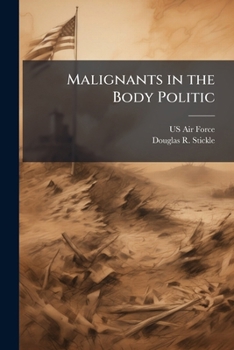
Malignants in the Body Politic: Redefining War Through Metaphor

In the aftermath of 9/11, President George W. Bush declared the dawn of a new kind of war. He has repeatedly emphasized that means and measures of success in this new war will differ greatly from wars past. However, if this "war on terrorism" is unlike any other war, then what is it like? From the public statements of high-ranking US officials, metaphorical answers emerge: terrorism is a metastasizing cancer, a plague, a threat from which we are not immune. Major Stickle explores the analogies of immunity, infection, and cancer. In doings so he addresses the classic strategic question: what is the nature of the enemy and of the fight? In the never-ending battle against microbes and a 30-year-old "war on cancer," the enemies are microbes-threats from without and threats from within. In the context of the announced war on terrorism, Major Stickle converts these biological and medical themes for reflective contemplation and concludes that the administration might look further to the language of disease to better communicate the challenges of the war on terrorists.
This work has been selected by scholars as being culturally important, and is part of the knowledge base of civilization as we know it. This work was reproduced from the original artifact, and remains as true to the original work as possible. Therefore, you will see the original copyright references, library stamps (as most of these works have been housed in our most important libraries around the world), and other notations in the work.
This work is in the public domain in the United States of America, and possibly other nations. Within the United States, you may freely copy and distribute this work, as no entity (individual or corporate) has a copyright on the body of the work.
As a reproduction of a historical artifact, this work may contain missing or blurred pages, poor pictures, errant marks, etc. Scholars believe, and we concur, that this work is important enough to be preserved, reproduced, and made generally available to the public. We appreciate your support of the preservation process, and thank you for being an important part of keeping this knowledge alive and relevant.
Related Subjects
Education Education & Reference History Political Science Politics & Social SciencesCustomer Reviews
ThriftBooks® and the ThriftBooks® logo are registered trademarks of Thrift Books Global, LLC
