


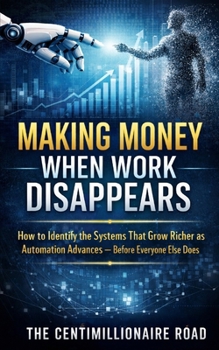
Making Money When Work Disappears: How to Identify the Systems That Grow Richer as Automation Advances, Before Everyone Else Does

Automation is not destroying wealth.
It is relocating it.
Most people are trying to adapt to automation by learning new skills, working harder, or staying "relevant."
That approach is structurally weak.
This book is not about jobs, careers, or reskilling.
It is about systems.
Specifically, it teaches you how to analyze any economic system and determine:
- which systems are structurally guaranteed to die as automation advances
- which systems will survive but never generate significant wealth
- which systems become more profitable because humans are removed
Instead of focusing on what works today, this book shows you how to identify:
- where value migrates when human execution disappears
- how automation concentrates control, not opportunity
- why most income models decay silently before they collapse
You will learn practical mental frameworks to evaluate businesses, platforms, professions, and markets before outcomes become obvious to the majority.
This is not a collection of ideas or predictions.
Each chapter provides:
- a structural filter
- concrete examples
- a practical test you can apply immediately
The goal is not to tell you what to build.
The goal is to train your perception.
Once you can see which systems benefit from automation - and which are harmed by it - positioning becomes a logical consequence rather than a guess.
This book is written for readers who understand that in an automated world:
- effort matters less than position
- visibility often correlates negatively with long-term profitability
- wealth is a byproduct of control, not activity
If you want reassurance, motivation, or generic advice, this book is not for you.
If you want a clear method to recognize where money will concentrate as automation accelerates, this book gives you the tools to see it early - and act accordingly.
Customer Reviews
ThriftBooks ® and the ThriftBooks ® logo are registered trademarks of Thrift Books Global, LLC
