
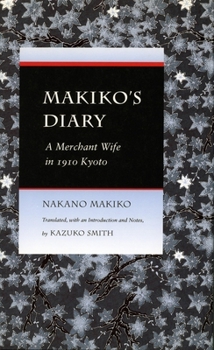
This intimate and richly informative diary kept in 1910 by the young wife of a bustling merchant household in Kyoto is an engaging, unique glimpse into the lives of ordinary people in early twentieth-century Japan. Includes 53 illustrations.
The year set down for us by Makiko, 1910, was during a period of great flux in Japanese history, as government-sponsored Westernization was continuing from the Meiji Restoration of 1868. But amidst the laying of water pipes, the playing of phonograph records, the nightly appearance of the electric light, and the ringing of telephones dwelled still the traditional Japanese nuclear family, with its ancestral responsibilities and strict division of labor according to gender. But not all is as it once was for the young wife of a Japanese merchant. Makiko lived during a time of great transition in the expectations of women as well, from the more traditional docility to a more modern assertion of her own rights. Torn by both the duties of her marriage and natal families, Makiko was also torn by her role as wife. Her diary is a fascinating look at this transition from the traditional to modern woman. This is an invaluable primary historical source and a surprisingly readable translation by Smith. One thing, however, is that there are just a few too many foot-notes, and they appear at the end of each entry, rather than at the end of a page. One should skim these, at first, for they do tend to slow down the narrative pace a bit. Advice to those who are reading this for a class: if you only skim the entries and foot-notes pertaining to Japanese food, the book is perhaps only two-thirds it's actual length! (In fairness to Makiko, one of the main reasons for her keeping a diary was to have a "recipe book," of sorts, to refer back on as she learned food preparation from her mother-in-law; I am sure she never dreamed that her diary would EVER be published.) An added bonus is the many photographs of the Nagano family spread throughout the book.
Looking in the Neighbors' Windows
Published by Thriftbooks.com User , 29 years ago
The lives of ordinary women tend to be poorly documented. This leaves a large gap between decriptions of the way things were supposed to have been and the way they actually were.This young wife's diary of the year 1910 details domestic life in the lively and prosperous family of a pharmacy owner. She simply set down everything just as it happened, which turns out to be much different than any sterotype.I would recommend this book to anyone interested in Japan, domestic life, or that gap I mentioned earlier
ThriftBooks sells millions of used books at the lowest
everyday prices. We personally assess every book's quality and offer rare, out-of-print treasures. We
deliver the joy of reading in recyclable packaging with free standard shipping on US orders over $15.
ThriftBooks.com. Read more. Spend less.

