


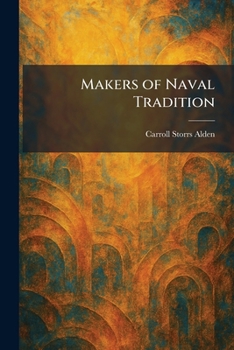
Makers of Naval Tradition

"Makers of Naval Tradition" is a comprehensive exploration of the influential figures and defining events that shaped the United States Navy into a formidable global force. This work examines the lives and legacies of key naval leaders whose vision, courage, and tactical brilliance established the core principles and traditions of American maritime power.
From the early days of the Revolutionary War through the strategic advancements of the early 20th century, the narrative details the evolution of naval warfare and the personal stories of those at the helm. Readers will find in-depth biographical sketches of legendary commanders, including John Paul Jones, Stephen Decatur, and David Farragut, highlighting their contributions to naval strategy and national defense. The text emphasizes the human element of history, showcasing how individual character and leadership decisions forged a lasting professional identity for the service.
This historical account serves as both a valuable resource for students of military history and an engaging tribute to the men who defined the spirit of the sea. By analyzing the development of naval doctrine alongside acts of personal heroism, "Makers of Naval Tradition" offers profound insights into the growth of the American Republic as a maritime nation and the enduring importance of sea power in international affairs.
This work has been selected by scholars as being culturally important, and is part of the knowledge base of civilization as we know it. This work was reproduced from the original artifact, and remains as true to the original work as possible. Therefore, you may see the original copyright references, library stamps (as most of these works have been housed in our most important libraries around the world), and other notations in the work.
This work is in the public domain in the United States of America, and possibly other nations. Within the United States, you may freely copy and distribute this work, as no entity (individual or corporate) has a copyright on the body of the work.
As a reproduction of a historical artifact, this work may contain missing or blurred pages, poor pictures, errant marks, etc. Scholars believe, and we concur, that this work is important enough to be preserved, reproduced, and made generally available to the public. We appreciate your support of the preservation process, and thank you for being an important part of keeping this knowledge alive and relevant.
Customer Reviews
ThriftBooks ® and the ThriftBooks ® logo are registered trademarks of Thrift Books Global, LLC
