


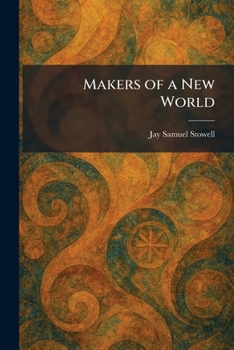
Makers of a New World

"Makers of a New World" is an insightful exploration of the lives and legacies of individuals dedicated to social and spiritual transformation in the early twentieth century. Written by Jay S. Stowell, this work serves as an educational and inspirational guide, profiling men and women who applied their faith to the pressing social challenges of their time. From the mission field to community centers, these figures represent the diverse ways in which religious conviction can drive meaningful progress and reform.
The narrative focuses on the character and contributions of these "makers," highlighting their roles in education, humanitarian efforts, and the promotion of social justice. By examining their struggles and successes, Stowell illustrates the vital connection between individual commitment and global change. The book is particularly valuable for those interested in the history of Christian missions and the Social Gospel movement, offering a window into a period of intense idealism and social reconstruction. Through these biographical portraits, "Makers of a New World" continues to offer timeless lessons on the power of service and the enduring impact of a life dedicated to the common good.
This work has been selected by scholars as being culturally important, and is part of the knowledge base of civilization as we know it. This work was reproduced from the original artifact, and remains as true to the original work as possible. Therefore, you may see the original copyright references, library stamps (as most of these works have been housed in our most important libraries around the world), and other notations in the work.
This work is in the public domain in the United States of America, and possibly other nations. Within the United States, you may freely copy and distribute this work, as no entity (individual or corporate) has a copyright on the body of the work.
As a reproduction of a historical artifact, this work may contain missing or blurred pages, poor pictures, errant marks, etc. Scholars believe, and we concur, that this work is important enough to be preserved, reproduced, and made generally available to the public. We appreciate your support of the preservation process, and thank you for being an important part of keeping this knowledge alive and relevant.
Customer Reviews
ThriftBooks ® and the ThriftBooks ® logo are registered trademarks of Thrift Books Global, LLC
