


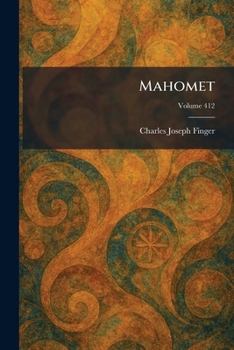
Mahomet

"Mahomet" offers a compelling and concise examination of the life and legacy of the prophet Muhammad. Written by Charles Joseph Finger, this work traces the remarkable journey of the founder of Islam from his early years in Mecca to his emergence as a pivotal religious and political leader. The narrative explores the social and spiritual landscape of seventh-century Arabia, providing vital context for the revelations and challenges that shaped the early Islamic community.
Finger delves into the character of the subject, examining his roles as a merchant, a visionary, and a statesman. The book highlights key milestones, including the Hegira to Medina and the eventual unification of the Arabian tribes under a new monotheistic faith. By focusing on the historical impact of Muhammad's teachings and the rapid expansion of his influence, the text provides readers with a foundational understanding of one of history's most influential figures.
Ideal for those seeking a clear and engaging introduction to the origins of Islam, "Mahomet" balances historical detail with a narrative style that emphasizes the enduring significance of its subject. This biographical study remains a valuable resource for anyone interested in world religions, Middle Eastern history, or the lives of great leaders who changed the course of civilization.
This work has been selected by scholars as being culturally important, and is part of the knowledge base of civilization as we know it. This work was reproduced from the original artifact, and remains as true to the original work as possible. Therefore, you may see the original copyright references, library stamps (as most of these works have been housed in our most important libraries around the world), and other notations in the work.
This work is in the public domain in the United States of America, and possibly other nations. Within the United States, you may freely copy and distribute this work, as no entity (individual or corporate) has a copyright on the body of the work.
As a reproduction of a historical artifact, this work may contain missing or blurred pages, poor pictures, errant marks, etc. Scholars believe, and we concur, that this work is important enough to be preserved, reproduced, and made generally available to the public. We appreciate your support of the preservation process, and thank you for being an important part of keeping this knowledge alive and relevant.
Customer Reviews
ThriftBooks ® and the ThriftBooks ® logo are registered trademarks of Thrift Books Global, LLC
